What Is Varicose Veins?
Varicose Veins Definition
Varicose Veins Meaning in Simple Terms
How Do You Get Varicose Veins?
- Valve incompetence: valves become loose and inefficient
- Blood pooling: blood flows backwards and collects
- Venous hypertension: pressure builds inside the veins
Primary Causes of Varicose Veins
- Weak or damaged vein valves
- Genetics (family history)
- Aging
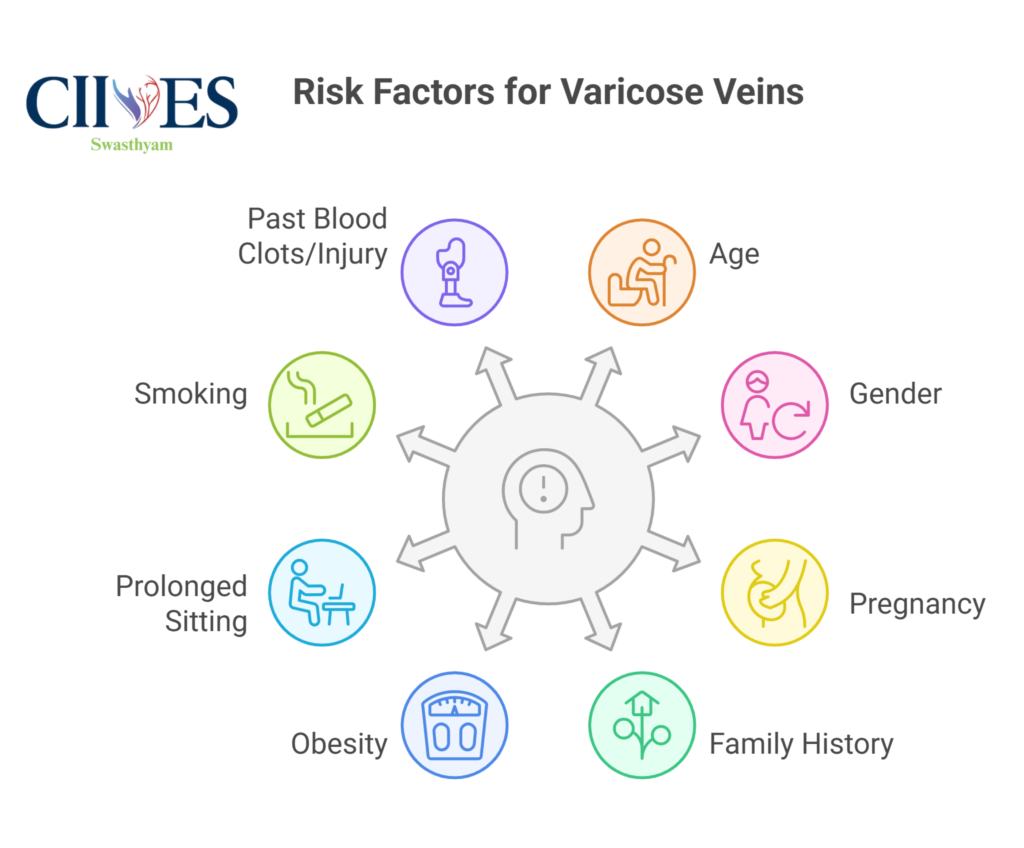
Top 5 Risk Factors of Varicose Veins
- Prolonged standing/sitting
- Family history
- Pregnancy or hormonal changes
- Obesity
- Sedentary lifestyle
 Read our complete guide on varicose veins causes and risk factors.
Diseases That Cause Varicose Veins
- Damaging vein valves
- Obstructing blood flow
- Increasing pressure within the veins
- Acute deep vein thrombosis (DVT): Sudden blood clots in deep veins can damage valves and obstruct flow, leading to varicose veins.
- Post-thrombotic syndrome (PTS): Long-term vein damage that develops after DVT causes chronic swelling and venous hypertension.
- Superficial thrombophlebitis: Inflammation and clotting in superficial veins that may coexist with varicose veins.
- Pelvic congestion syndrome: Dilated pelvic veins that can contribute to varicose veins in the legs, especially in women.
- Pelvic tumours or cysts: Can compress veins and impair function.
- Congenital vein abnormalities: Rare conditions such as Klippel–Trénaunay syndrome, where veins are malformed from birth
- Obesity: Increases pressure on leg veins and weakens valve function.
- Hormonal imbalances: High estrogen states (pregnancy, menopause, oral contraceptives) relax vein walls.
- Diabetes & Hypertension: Long-term vessel wall damage worsens circulation.
- Chronic constipation: Repeated straining raises pressure in abdominal and leg veins.
Are Varicose Veins Related to Other Diseases?
Varicose Veins Symptoms
Early Stage Symptoms of Varicose Veins
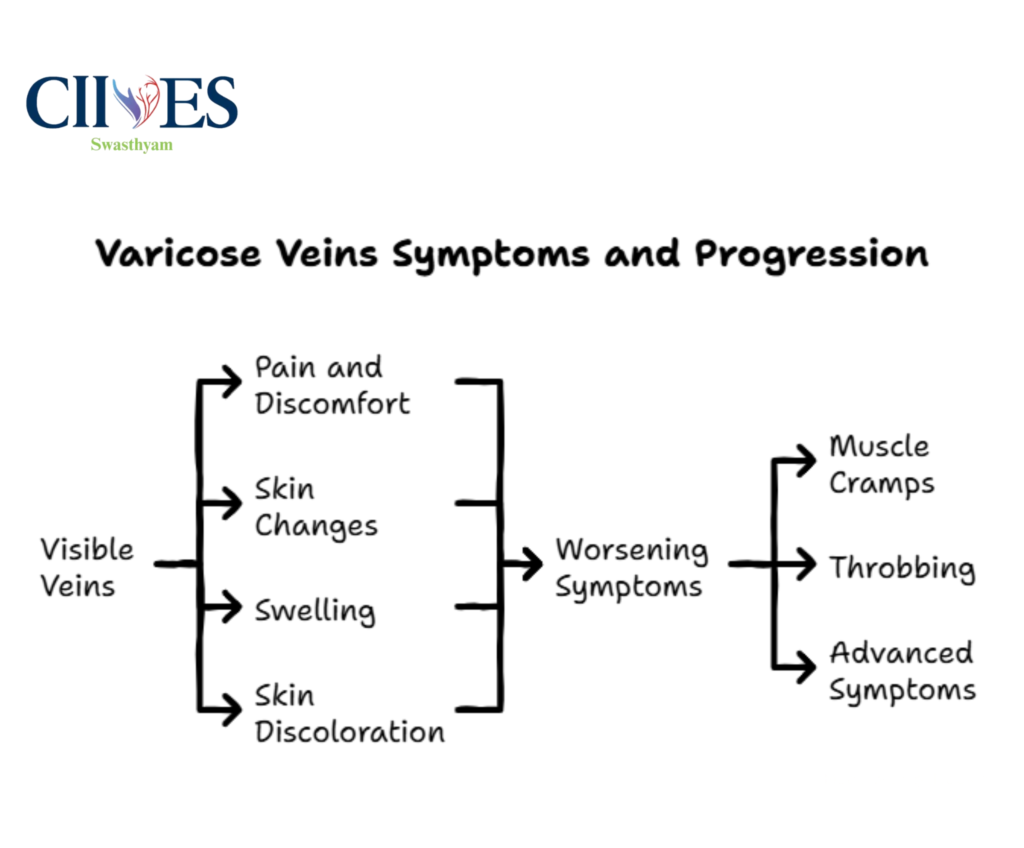
- Visible blue, purple, or bulging veins
- Aching or heavy feeling in the legs
- Mild leg pain after prolonged standing or sitting
- Leg fatigue or tiredness
- Burning, throbbing, or tingling sensation
Chronic Venous Disease
- Thickened, hardened, or inflamed skin
- Eczema-like skin changes
- Lipodermatosclerosis (tight, firm skin around ankle)
- Non-healing wounds or venous ulcers near the ankle
- Bleeding from fragile surface veins
When to See a Vein Specialist
Red Flag Symptoms
- Persistent ache or heaviness
- Bleeding from a varicose vein
- Ulcers near the ankle that do not heal >4-6weeks
- Redness, warmth, or tenderness along a vein
Should You Worry About Varicose Veins
Varicose Veins Treatment
- Endovenous Laser Ablation (EVLA): Uses laser energy to seal the diseased vein from inside.
- VenaSeal (Glue Ablation): Medical adhesive used to close the vein without heat or tumescent anaesthesia.
- Sclerotherapy: Injection of a solution or foam to collapse smaller varicose or spider veins.
- Phlebectomy: Removal of bulging surface veins through tiny skin punctures.
Home Remedies for Varicose Veins
- Regular walking & calf exercises: Improves blood flow and activates the calf muscle pump
- Leg elevation: Elevate legs above heart level for 15–20 minutes, 2–3 times daily
- Compression stockings: Provide graduated pressure to support vein function
- Weight management: Reduces pressure on leg veins
- Avoid prolonged sitting or standing: Take movement breaks every 30–60 minutes
FAQs
What is the best treatment for varicose veins?
The best treatment for varicose veins is to close or remove the faulty veins using minimally invasive procedures such as laser ablation, VenaSeal glue ablation or sclerotherapy. These endovascular treatments address the root cause and provide long-term relief. However, the choice of procedure depends on disease severity and symptoms
Do compression stockings really help varicose veins?
Compression stockings help manage varicose vein symptoms and slow the progression. They do not cure varicose veins or repair faulty valves.
Compression stockings apply graduated pressure to the legs to improve blood flow and reduce swelling, aching, and heaviness. They are most useful in the early stages and after varicose veins treatment to support healing and maintain result
How to prevent varicose veins naturally?
Varicose veins can be prevented naturally by improving circulation and reducing pressure in the leg veins.
Exercises like heel raises or calf push-ups help strengthen the vein valves. Additionally, these habits help prevent varicose veins naturally:
- Regular walking or calf-strengthening exercises
- Maintaining a healthy weight
- Avoiding prolonged sitting or standing
- Elevating the legs when resting
- Wearing loose, comfortable clothing
Can you get rid of varicose veins permanently?
The best treatment for varicose veins is to close or remove the faulty veins using minimally invasive procedures such as laser ablation, VenaSeal glue ablation or sclerotherapy. These endovascular treatments address the root cause and provide long-term relief. However, the choice of procedure depends on disease severity and symptoms.
Compression stockings help manage varicose vein symptoms and slow the progression. They do not cure varicose veins or repair faulty valves.
Compression stockings apply graduated pressure to the legs to improve blood flow and reduce swelling, aching, and heaviness. They are most useful in the early stages and after varicose veins treatment to support healing and maintain results.