Table of Contents
-
1. Quick Answer
-
2. Synopsis
-
3. What Is an Abdominal Aortic Aneurysm?
-
4. Causes & Risk Factors of Abdominal Aortic Aneurysm
-
5. Abdominal Aortic Aneurysm Symptoms
-
6. What Is the Best Treatment for Abdominal Aortic Aneurysm?
-
7. What Are the Complications Related to AAA Aneurysm?
-
8. How To Prevent Abdominal Aortic Aneurysm?
-
9. Take Home Message
-
10. FAQs
Quick Answer
- AAA Definition: An abdominal aortic aneurysm (AAA) is a bulge of the abdominal aorta (the largest artery in the stomach region) caused by weakening of the arterial wall
- Causes: Common causes are smoking/tobacco, atherosclerosis/plaque buildup, high BP; risk factors include ageing, male sex and family history
- Symptoms: Often silent; may present with a pulsating abdominal mass or dull aching pain in the abdomen & back
- Signs of AAA Rupture: Sudden severe pain, dizziness or collapse may indicate rupture, and it is a surgical emergency
- Treatment of AAA: For small aneurysms, monitoring and for larger or high-risk cases, surgical repair (EVAR or open surgery) is suggested
Synopsis
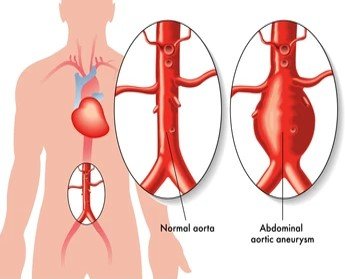
An abdominal aortic aneurysm (AAA) is a progressive vascular condition where the wall of the aorta weakens and bulges outward like a balloon. Normally, the aorta is flexible enough to compensate for minor variations in blood pressure, but a weakened area of the wall results in abnormally large ballooning of the vessel in that region.
Most aneurysms develop silently and are detected incidentally during imaging performed for unrelated abdominal, back or vascular conditions. However, as the aneurysm enlarges, the risk of rupture increases significantly, leading to life-threatening internal bleeding.
What Is an Abdominal Aortic Aneurysm?
AAA is a permanent, localised enlargement of the abdominal aorta caused by weakening of the vessel wall, usually in the segment below the kidneys. It is considered an aneurysm when the affected artery enlarges to more than 1.5 times its normal diameter or measures more than 3 cm.
It develops silently over time due to underlying vascular damage, and as it enlarges, the risk of rupture increases, which can lead to life-threatening internal bleeding if not detected in time.
Causes & Risk Factors of Abdominal Aortic Aneurysm
- Atherosclerosis: Chronic inflammation and plaque buildup weaken and remodel the arterial wall
- Smoking: Strongest modifiable risk factor; accelerates elastin degradation and aneurysm expansion
- Hypertension: Persistent pressure increases mechanical stress on the aortic wall
- Ageing: Loss of elasticity and structural integrity increases susceptibility
- Genetic predisposition: Family history significantly increases risk due to inherited connective tissue weakness
- Male gender: Higher prevalence due to hormonal and structural vascular differences
- Connective tissue disorders: Conditions like Marfan syndrome reduce vessel wall strength
- Inflammatory processes: Proteolytic enzyme activity leads to matrix degradation and wall thinning
Did you know?
Aneurysm in the abdominal aorta is more common than in the thoracic aorta.
Abdominal Aortic Aneurysm Symptoms
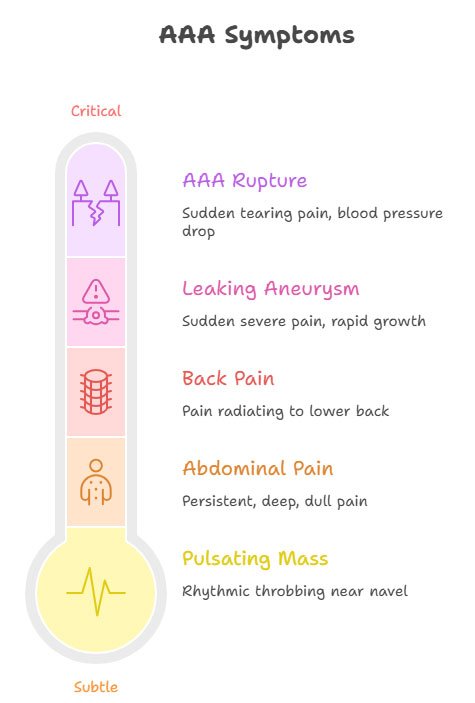
Most abdominal aortic aneurysms remain asymptomatic until they enlarge or rupture, making early detection challenging.
Pulsating Abdominal Mass
- A rhythmic, throbbing sensation near the navel is considered a classical clinical sign
- Caused by turbulent blood flow within the dilated segment of the aorta
- More easily felt in slim individuals or during clinical examination
Abdominal Pain
- Persistent, deep and dull pain due to stretching of the aortic wall
- May indicate progressive enlargement of the aneurysm
- Pain intensity may increase as wall tension rises
Back or Flank Pain
- Pain radiating to the lower back due to posterior expansion
- May result from pressure on surrounding nerves or structures
- Often misdiagnosed as musculoskeletal pain, delaying detection
Expanding or Leaking Aneurysm
- Sudden severe abdominal or back pain may occur when aneurysm size exceeds 5.5 cm, increasing rupture risk
- Pain can radiate to the groin, pelvis or legs as the aneurysm expands
- Growth greater than 0.5 cm in 6 months or 1 cm annually suggests instability and requires urgent evaluation
AAA Rupture - Symptoms (Medical Emergency)
- Sudden, severe, rapid onset of tearing pain
- Sharp drop in blood pressure leading to dizziness or collapse
- Cold, clammy skin with rapid pulse due to internal bleeding
- Represents a life-threatening emergency requiring immediate surgery
What Is the Best Treatment for Abdominal Aortic Aneurysm?
AAA treatment is guided by aneurysm size, growth rate and risk of rupture.
Surveillance (Watchful Waiting)
- Small aneurysms (<5 cm) are monitored through periodic ultrasound or CT imaging
- Regular follow-up helps detect rapid expansion early, defined as aneurysm growth greater than 0.2-0.5 cm in 6 months or greater than 1 cm in 1 year.
- Focus on aggressive control of risk factors to slow progression is important
Medical Management
- Strict blood pressure control reduces stress on the aneurysm wall
- Smoking cessation is critical to prevent further degeneration
- Statins and antiplatelet therapy may stabilise underlying vascular disease
Endovascular Aneurysm Repair (EVAR)
- Minimally invasive procedure using a stent graft inserted via the femoral artery
- Excludes the aneurysm from circulation, reducing rupture risk
- Preferred for suitable anatomy due to faster recovery and lower short-term risk
Open Surgical Repair
- Involves direct replacement of the aneurysmal segment with a synthetic graft
- Recommended for large, rapidly expanding or ruptured aneurysms
- Provides durable long-term outcomes but requires longer recovery
What Are the Complications Related to AAA Aneurysm?
- Aneurysm rupture: Causes massive internal bleeding with high mortality, often exceeding 50% within the first 30 days.
- Aortic dissection: A tear in the vessel wall that can rapidly progress and is a surgical emergency
- Thrombus formation: Clots within the aneurysm may embolise and block distal arteries
- Distal embolisation: Reduced blood supply to limbs or organs
- Compression effects: Pressure on nearby organs, nerves or veins
- Post-repair complications: Endoleak, graft infection or long-term vascular issues
How To Prevent Abdominal Aortic Aneurysm?
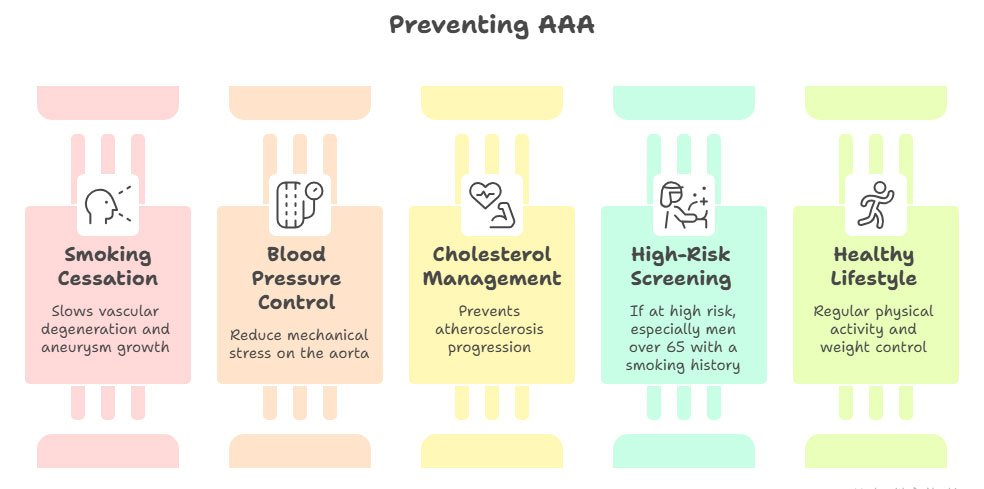
- Quit smoking to slow vascular degeneration and aneurysm growth
- Controlled blood pressure with medication or lifestyle modification to reduce mechanical stress on the aorta
- Manage cholesterol levels to prevent atherosclerosis progression
- Undergo screening if at high risk, especially men over 65 with a smoking history
- Maintain a healthy lifestyle with regular physical activity and weight control
Take Home Message
An abdominal aortic aneurysm is often a silent condition because it progresses without clear symptoms until complications arise. The most important shift in modern care is early detection through screening in high-risk individuals, especially those with a history of smoking or vascular disease.
What makes AAA risky & complex is its unpredictable nature. Some aneurysms remain stable for years, while others expand rapidly. This is why regular imaging follow-up is essential.
Evaluation by a vascular surgeon and timely intervention, whether through monitoring or surgery, significantly reduces the risk of rupture and improves survival.
FAQs
How to confirm an abdominal aortic aneurysm?
Ultrasound is the first-line test used to detect and measure an abdominal aortic aneurysm due to its accuracy and accessibility. CT scan provides detailed information about size, structure and rupture risk, making it essential for surgical planning.
MRI may be used in specific cases. Many aneurysms are detected incidentally, which highlights the importance of screening in high-risk individuals such as older adults and smokers.
Can an abdominal aortic aneurysm be treated without surgery?
Small aneurysms can often be managed without immediate surgery through regular monitoring and strict risk factor control. Blood pressure management and smoking cessation are essential to slow progression.
However, once the aneurysm reaches a high-risk size or shows rapid growth, surgical repair becomes necessary. Conservative management requires consistent follow-up, as delayed intervention increases the risk of rupture and serious complications.
Can pregnancy increase the risk of AAA aneurysm complications?
AAA during pregnancy is rare but dangerous due to increased blood volume and hormonal changes that weaken the vessel wall.
Women with connective tissue disorders such as Marfan syndrome or pre-existing aneurysms are at higher risk of enlargement or rupture during pregnancy. Sudden abdominal, chest or back pain during pregnancy should never be ignored and requires immediate medical evaluation.