Overview
Modern varicose vein treatment options are safe, quick, and minimally invasive, offering minimal discomfort and a faster recovery.
Early-stage varicose veins can be managed with conservative approaches, such as lifestyle modifications, compression stockings, or sclerotherapy. In contrast, advanced cases are typically treated using endovascular procedures, including laser treatment (EVLA), radiofrequency ablation (RFA), or glue ablation (VenaSeal).
This guide explains modern varicose veins treatment options, how they work, recovery expectations, and how doctors decide the most suitable approach.
When Do Varicose Veins Need Treatment?
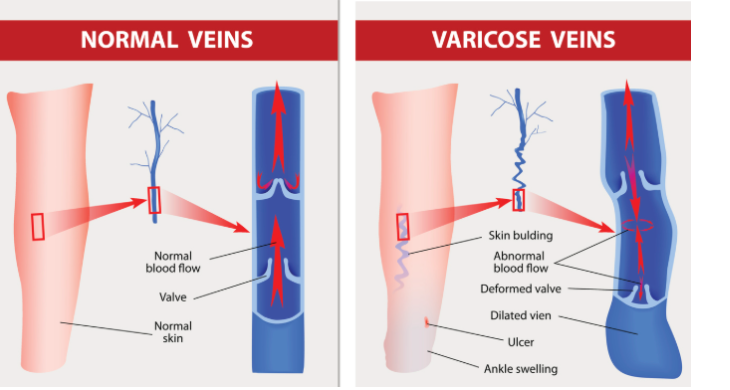
Varicose vein treatment is recommended when the condition begins to cause symptoms, progresses over time, or carries a risk of complications.
Treatment is usually advised when:
- Leg heaviness, pain, or swelling affects daily routine
- Symptoms worsen despite conservative care
- There is concern about vein appearance
- There is risk of complications such as clot formation
- Bleeding occurs from varicose veins
- Non-healing leg wounds or ulcers develop
Treatment decisions are based on symptoms, vein anatomy, and ultrasound findings—not appearance alone.
Varicose Veins Treatment Options
Modern varicose vein treatment is tailored to disease severity and patient needs. Options range from conservative management to minimally invasive endovascular procedures.
The three most popular treatment options are Laser ablation, VenaSeal glue ablation and sclerotherapy.
| Varicose Veins Treatment Comparison | |||
|---|---|---|---|
| Procedure | Laser Ablation (EVLA) | Glue Ablation (VenaSeal) | Sclerotherapy |
| Treatment type | Thermal endovascular | Non-thermal endovascular | Injection-based |
| How it works | Laser heat seals vein from inside | Medical glue seals vein instantly | Sclerosant collapses vein |
| Best suited for | Large truncal veins (GSV/SSV) | Truncal veins, near nerves | Spider, reticular, small veins |
| Anaesthesia | Local | Local | Usually none |
| Heat used | Yes | No | No |
| Compression stockings | Recommended | Usually not required | Recommended |
| Post-procedure pain | Mild | Minimal | Minimal |
| Hospital stay | Day-care | Day-care | Outpatient |
| Return to activity | 1–2 days | Same day | Same day |
| Long-term outcome | Excellent, durable | Excellent, durable | Cosmetic improvement |
Minimally Invasive Treatment For Varicose Veins
Minimally invasive treatments are endovascular procedures performed through a single puncture and catheter without incisions or stitches.
These treatments close the diseased vein from inside, allowing blood to reroute through healthy veins.
Advantages:
- Performed under local anaesthesia
- Day-care procedures
- No incision or scars
- Faster recovery and early return to routine activities
Laser Treatment for Varicose Veins (EVLA/EVLT)
Endovascular Laser Ablation (EVLA) is a reliable and long-lasting treatment option for varicose veins.
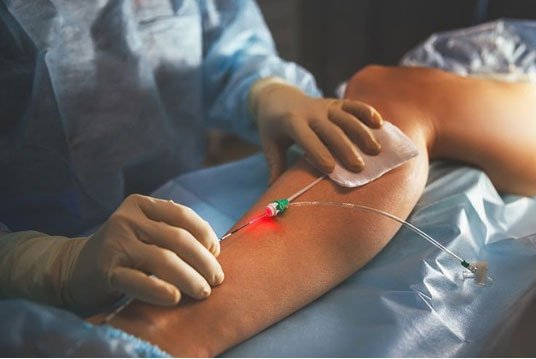
A laser fibre is inserted into the faulty vein under ultrasound guidance. Laser energy is delivered to seal the vein internally, permanently closing it.
Recovery
- Walking immediately after the procedure
- Return to routine work within 1–2 days
Research shows success in 95–98% cases at one-year follow-up, with excellent symptom relief and ulcer healing.
Glue Ablation (VenaSeal)
A medical-grade adhesive is delivered inside the faulty vein, sealing it instantly without heat.
Advantages
- Segmental delivery: Increased control to the operator
- Glue hardens in about 20 minutes
- Minimal post-procedure discomfort
- Immediate return to normal activities
Research shows the efficacy of glue ablation to be similar to thermal techniques. VenaSeal is preferred when:
- Varicose veins are close to nerves
- Heat-based treatment is not suitable
- Compression stockings cannot be used
Sclerotherapy: Injection-Based Varicose Veins Treatment
How it works
A special solution or foam sclerosant is injected into the affected vein. The solution irritates the vein lining, causing it to collapse and gradually fade as blood is redirected to healthy veins.
Advantages:
- Gold standard treatment for spider and reticular veins
- Effective for symptomatic veins
- Can be used as a primary treatment for cosmetic concerns
- Performed as an outpatient procedure
Sclerotherapy is not advised when:
- There is a known allergy to the sclerosant
- Active infection is present (general or at the treatment site)
- There is a history of DVT or PAD
Recovery:
- No hospital stay
- Normal activities can usually be resumed the same day
Note: Sclerotherapy improves appearance but does not correct deeper valve failure
Conservative Varicose Veins Treatment
Lifestyle Measures
These steps help reduce venous pressure, improve comfort and help maintain results after surgery.
- Regular walking and calf muscle exercises
- Avoiding prolonged sitting or standing
- Leg elevation during rest
- Weight management and hydration
Certain lifestyle measures, such as regular activity and compression stockings, should be continued long-term—even after endovascular treatment—to prevent new veins from becoming varicosed.
Compression Stockings
Compression stockings apply external pressure to support veins and improve upward blood flow.
How they work:
Tighter at the ankle, with pressure gradually decreasing up the leg.
- Promote better blood circulation.
- Help reduce leg swelling.
When are they recommended?
- No junctional incompetence detected (failure of vein valves at key points causing reflux).
- Only reticular veins (smaller, less severe veins) are visible.
- Mild symptoms that don’t interfere with daily life.
- Maintenance after surgical treatment of varicose veins.
- Preventing DVT in high-risk patients.
Important facts:
- Provide temporary relief, but DO NOT cure varicose veins.
- Venous reflux returns as soon as stockings are removed.
- Not a substitute for curative treatments.
Compression therapy is often used alongside other treatments or when procedures are not immediately required.
Choosing the Right Varicose Veins Treatment
There is no single “best” treatment for everyone. The ideal approach depends on:
- Stage and extent of vein disease
- Ultrasound findings
- Symptoms and lifestyle needs
- Medical history
A detailed vascular evaluation ensures that treatment is both effective and durable.
When Should You See a Vascular Specialist?
Consult a vascular surgeon if:
- Symptoms persist despite conservative measures
- Swelling becomes daily
- Pain interferes with routine activities
- Skin colour changes or thickening appear
- Any leg wound heals slowly
Seek immediate vascular opinion if:
- Sudden leg swelling occurs with pain in one leg
- Skin breaks down, or ulcers form
- Symptoms worsen rapidly
These signs indicate causes other than varicose veins.
Take Home Message
Early evaluation allows timely treatment and prevents long-term complications. Choosing the right varicose veins treatment option is based on disease stage & symptoms, which helps prevent progression, skin damage, and recurrence.
Frequently Asked Questions
What is the best treatment for varicose veins?
The best treatments for varicose veins are Endovascular Laser Ablation (EVLA/EVLT), VenaSeal glue ablation and foam sclerotherapy.
A qualified vascular specialist can choose the best option based on:
- Severity of vein disease
- Symptoms and severity
- Ultrasound findings
- Patient lifestyle
Treatment usually starts with conservative care and progresses to minimally invasive or surgical options as required.
- Mild or early varicose veins may be managed with at-home remedies & lifestyle changes such as regular walking, leg elevation, weight management, and compression stockings.
- Symptomatic or progressive varicose veins are best treated with minimally invasive, ultrasound-guided procedures such as Endovenous Laser Ablation (EVLA) or Radiofrequency Ablation (RFA), which close the diseased vein from inside with near-perfect success rates.
- Residual or cosmetic veins with small diameters may be treated with sclerotherapy.
- Surgery (ligation or stripping) is now rarely required and reserved for select advanced or recurrent cases.
A duplex ultrasound (Doppler) is essential to plan a treatment that offers long-term relief, low recurrence, and fast recovery.
Is laser treatment safe for varicose veins?
Yes. Endovascular laser ablation or EVLA, is a safe, FDA-approved, minimally invasive procedure. It is performed under ultrasound guidance and has a success rate of more than 95% in the Indian population.
When performed by qualified vascular surgeons (DrNB), EVLA carries a low risk of complications. Most patients can return to normal daily activities within 24–48 hours after the procedure.
How can I permanently cure varicose veins?
Yes. Endovascular laser ablation or EVLA, is a safe, FDA-approved, minimally invasive procedure. It is performed under ultrasound guidance and has a success rate of more than 95% in the Indian population.
When performed by qualified vascular surgeons (DrNB), EVLA carries a low risk of complications. Most patients can return to normal daily activities within 24–48 hours after the procedure.
Varicose veins can be permanently treated by closing or removing the faulty veins responsible for blood pooling. Damaged vein valves do not repair or heal on their own, which is why creams, tablets, or home remedies cannot cure varicose veins
- Endovenous Laser Ablation (EVLA) and Radiofrequency Ablation (RFA) are the most effective treatments for permanently closing diseased veins, with high long-term success rates.
- Sclerotherapy is used for smaller or residual veins
- VenaSeal or a medical adhesive may be used in selected cases
- Surgery (ligation and stripping) is now rarely required
Once treated, the affected vein does not return. However, since valve weakness may persist and varicose veins can be progressive, new veins can develop over time. This progression can be slowed with preventive measures such as regular walking, weight control, leg elevation, and avoiding prolonged standing or sitting.
A duplex ultrasound evaluation by a qualified vascular specialist is essential to ensure complete treatment, durable results, and low recurrence.