Quick Answer
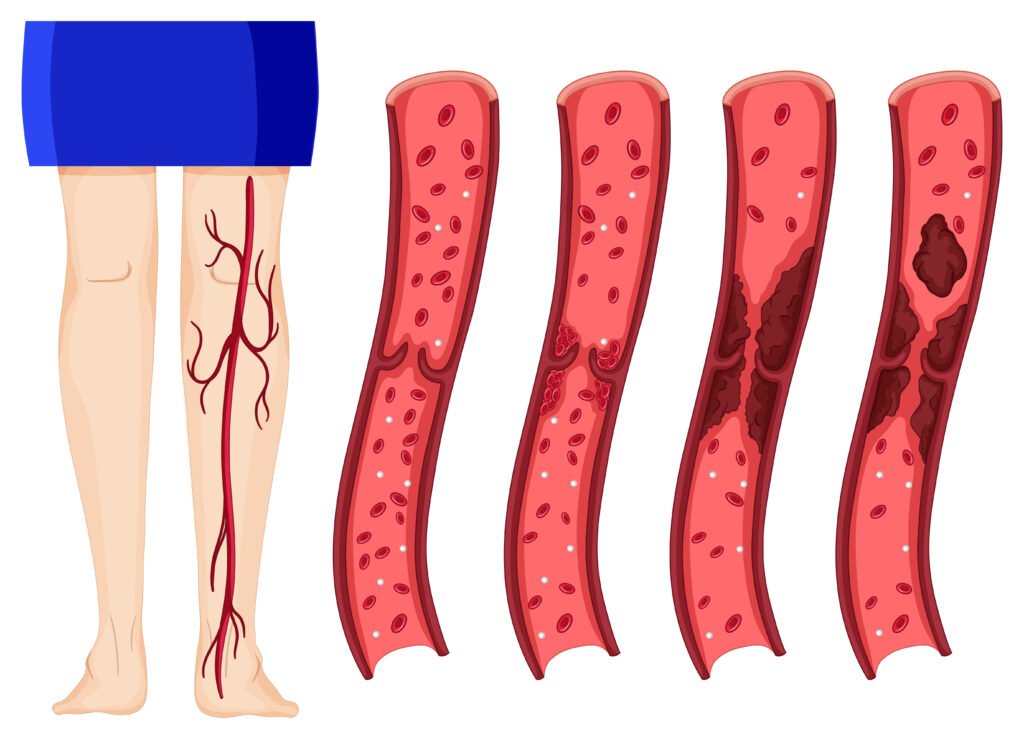
- DVT: Deep vein thrombosis is a blood clot in deep leg veins that disrupts normal blood flow.
- DVT Symptoms: Sudden leg swelling with pain in one leg; warm to touch.
- DVT Cause: Clots form due to slow blood flow, vein injury or increased clotting tendency.
- Major Risk: Clot migration can lead to pulmonary embolism, a life-threatening complication.
- DVT Treatment: Early recognition, timely treatment and prevention of recurrence are essential.
Synopsis
What is Deep Vein Thrombosis (DVT)?
Deep Vein Thrombosis Symptoms
- Swelling in one leg, particularly in the calf or thigh, due to venous obstruction
- Pain or tenderness, often described as a cramp or heaviness, worsening with movement
- Warmth and redness over the affected area caused by inflammation of deep veins
- Visible or enlarged superficial veins due to altered venous circulation
- Leg fatigue or discomfort, especially after prolonged standing or walking
Why Some DVT Cases Have No Symptoms?
- A significant number of DVT cases remain asymptomatic, especially in early stages or when smaller veins are involved.
- Distal (calf vein) DVT is often silent and may go unnoticed
- Proximal clots (clots located in larger veins higher up in the leg, such as the thigh) are more likely to cause visible symptoms due to a greater affected area
- Asymptomatic DVT is commonly identified in hospitalised or high-risk patients
- In some cases, the first sign may be a complication such as pulmonary embolism
Common Causes of DVT
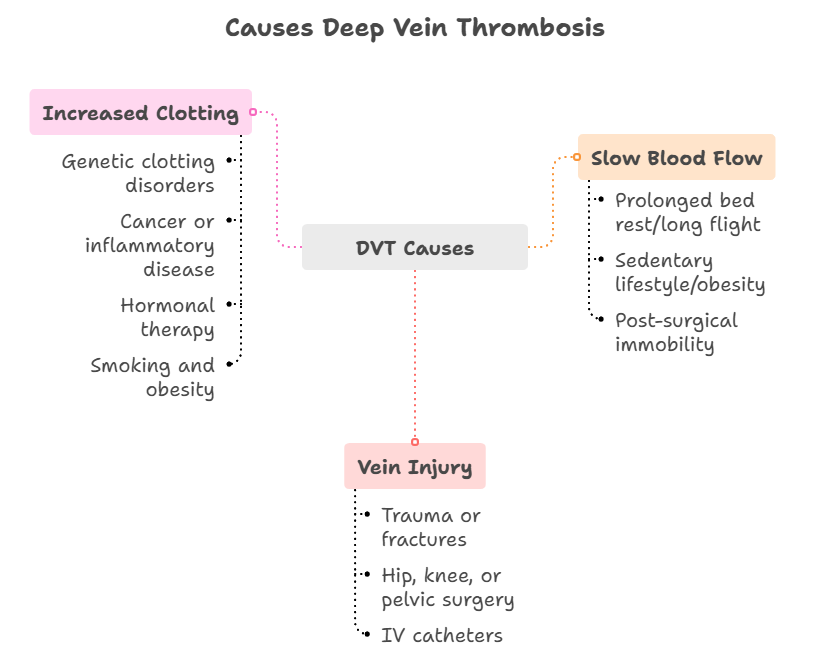
- DVT develops when one or more of the three triggers: slow blood flow, vein injury or increased clotting tendency.
Slow Blood Flow
- Reduced venous circulation leads to blood pooling in leg veins, increasing clot risk.
- Prolonged immobility, such as bed rest, long flights or a sedentary lifestyle, slows blood movement.
- Hospitalisation or post-surgical recovery further limits muscle activity that supports circulation.
Vein Injury
- Trauma, fractures or direct injury to blood vessels can trigger clot formation.
- Surgical procedures, especially involving the hip, knee or pelvis, increase risk.
- Medical devices such as intravenous catheters may cause injury.
Hypercoagulability (Increased Clotting)
- Genetic conditions can make blood more prone to clotting
- Chronic illnesses such as cancer or inflammatory diseases alter clotting pathways.
- Hormonal influences, including pregnancy or contraceptive use, increase clot risk.
- Lifestyle factors such as smoking and obesity contribute to a pro-thrombotic state.
What are the Risk Factors of DVT?
Pressure on Veins
- Increased pressure on leg veins can slow blood flow and promote clot formation.
- Pathological factors such as obesity put pressure on deep veins and impair venous return.
- Non-pathological conditions like pregnancy increase intra-abdominal pressure, affecting blood flow from the legs.
- Prolonged pressure on veins may contribute to venous stasis and clot risk.
Immobility
- Reduced movement slows venous circulation, allowing blood to pool in the lower limbs.
- Pathological reasons include post-surgical recovery, trauma or hospitalisation, where mobility is limited.
- Non-pathological factors include long travel, desk jobs or sedentary lifestyle habits.
- Lack of calf muscle activity reduces the natural pumping mechanism that supports blood flow.
Other Causes
- Smoking damages blood vessels and increases clotting tendency.
- Hormonal therapies, including contraceptives or hormone replacement therapy, alter clotting mechanisms.
- Genetic clotting disorders increase the likelihood of abnormal blood clot formation.
- Chronic medical conditions such as cancer or inflammatory diseases can further increase clotting risk.
How is DVT Diagnosed?
- Wells Score: Estimates DVT probability based on symptoms and risk factors, guiding further testing
- D-dimer test: Rules out DVT in low-risk patients; elevated levels alone cannot confirm it
- Compression duplex ultrasound: Identifies clot location and extent non-invasively – confirms DVT.
Common Treatments for Deep Vein Thrombosis (DVT)
- Anticoagulant therapy: Preferred first option, prevents clot progression and lowers embolism risk.
- Compression therapy: Improves venous blood flow and reduces swelling.
- Thrombolysis: Used in severe cases to dissolve large clots.
- IVC filters: Considered when anticoagulation is not suitable.
Recovery After DVT Treatment
- Early movement and walking help restore normal venous circulation.
- Gradual return to daily activity reduces the risk of complications.
- Some patients may develop post-thrombotic syndrome (PTS): causing chronic leg pain, swelling & skin changes due to vein valve damage.
- Regular follow-up is essential to monitor recovery and prevent recurrence.
DVT Prevention: Home Remedies
- Simple exercises like heel raises or soleus pushups activate calf muscles and push blood upwards.
- Staying hydrated supports optimal blood flow and prevents blood from becoming more prone to clotting.
- Maintaining a healthy body weight reduces pressure on leg veins and improves circulation.
- Compression stockings are advised in high-risk individuals to support venous return.
- Preventive medical therapy is considered in patients with high clot risk based on clinical evaluation.
When to See a Vascular Surgeon for DVT?
- Swelling in one leg that does not improve with rest or elevation
- Persistent calf pain or heaviness, especially after a long flight, surgery or bed rest
- Sudden breathlessness, chest pain or rapid heartbeat — these may indicate pulmonary embolism
- A confirmed DVT diagnosis where clot size, location or progression needs further assessment
- Recurrent DVT or a known clotting disorder requiring long-term management
Take Home Message
FAQs
How to check for a blood clot in your leg?
Symptoms such as swelling, pain, warmth or redness in one leg should prompt medical evaluation. Diagnosis is confirmed using imaging tests like Doppler ultrasound, along with blood tests such as D-dimer. Self-diagnosis is not reliable, as symptoms can overlap with other conditions.
Who is more likely to get DVT?
People with prolonged immobility, recent surgery or hospitalisation are at higher risk. Medical conditions such as cancer, obesity and hormonal influences also increase susceptibility. Individuals with a personal or family history of blood clots are more likely to develop DVT.
What are the complications associated with untreated DVT?
Untreated DVT can lead to pulmonary embolism if the clot travels to the lungs. Long-term complications include post-thrombotic syndrome, which causes chronic pain and swelling. It may also result in persistent venous insufficiency and increase the risk of recurrent blood clots.
Can DVT go away on its own?
No, without anticoagulation, the clot can extend, trigger pulmonary embolism or cause permanent vein damage leading to post-thrombotic syndrome. Medical evaluation is essential even when symptoms appear mild. In rare cases, small clots may partially dissolve without treatment, but this is unpredictable and carries significant risk.
Is DVT dangerous?
DVT itself is treatable, but untreated or undetected DVT carries serious risks. The most immediate danger is pulmonary embolism: when a clot breaks off and travels to the lungs, which can be life-threatening. Long-term risks include post-thrombotic syndrome and chronic venous insufficiency. Early diagnosis and treatment significantly reduce these risks.
Symptoms such as swelling, pain, warmth or redness in one leg should prompt medical evaluation. Diagnosis is confirmed using imaging tests like Doppler ultrasound, along with blood tests such as D-dimer. Self-diagnosis is not reliable, as symptoms can overlap with other conditions. People with prolonged immobility, recent surgery or hospitalisation are at higher risk. Medical conditions such as cancer, obesity and hormonal influences also increase susceptibility. Individuals with a personal or family history of blood clots are more likely to develop DVT. Untreated DVT can lead to pulmonary embolism if the clot travels to the lungs. Long-term complications include post-thrombotic syndrome, which causes chronic pain and swelling. It may also result in persistent venous insufficiency and increase the risk of recurrent blood clots. No, without anticoagulation, the clot can extend, trigger pulmonary embolism or cause permanent vein damage leading to post-thrombotic syndrome. Medical evaluation is essential even when symptoms appear mild. In rare cases, small clots may partially dissolve without treatment, but this is unpredictable and carries significant risk. DVT itself is treatable, but untreated or undetected DVT carries serious risks. The most immediate danger is pulmonary embolism: when a clot breaks off and travels to the lungs, which can be life-threatening. Long-term risks include post-thrombotic syndrome and chronic venous insufficiency. Early diagnosis and treatment significantly reduce these risks.