Quick Answer
- Varicose Veins Increase DVT Risk: Current research indicates that varicose veins have a higher chance of developing clots (DVT)
- Why the Risk Increases: Blood pooling and vein wall inflammation can create conditions that favour clot formation
- Shared Risk Factors: Age, obesity, pregnancy and inactivity raise the risk of both varicose veins and DVT
- Severity Matters: Risk is generally low in mild cases but rises with advanced venous disease or added medical factors
- Why Early Care Matters: Recognising symptoms early supports timely evaluation and reduces the chance of serious complications
Synopsis
Research suggests that varicose veins can increase the risk of DVT by promoting blood pooling and vein inflammation, which favour clot formation.
Although the overall risk remains low in mild disease, common risk factors such as age, obesity, inactivity and pregnancy can raise the likelihood.
Understanding this relationship helps patients recognise warning signs and seek timely vascular care.
DVT vs Varicose Veins
Varicose Veins
Varicose veins affect the superficial veins — the vessels closer to the skin’s surface. They develop when the one-way valves inside these veins weaken, causing blood to pool in the legs.
Over time, this pooling increases pressure, leading to the visible twisting and enlargement of veins. While often dismissed as a cosmetic concern, varicose veins reflect an underlying issue of venous insufficiency.
Deep Vein Thrombosis
DVT, on the other hand, affects the deeper venous system. It occurs when a blood clot forms in a deep vein, most commonly in the legs, partially or completely blocking blood flow. This can cause sudden swelling, pain, warmth and tenderness in the affected area.
An alarming situation arises when a part of the clot breaks off and travels to the lungs, blocking the lung artery, causing breathlessness. This is called a pulmonary embolism (PE) and is life-threatening.
Do Varicose Veins Increase the Risk of DVT?
Yes, the relationship between varicose veins and DVT runs in both directions. While varicose veins may predispose a person to DVT, a clot event can also lead to varicose veins over time. This occurs through a mechanism called post-thrombotic syndrome (PTS), in which chronic venous obstruction damages the valves, leading to persistent venous pressure.
Varicose veins increase clot risk through several interconnected mechanisms:
- When blood collects or moves sluggishly inside damaged veins, clotting substances accumulate and trigger the body’s clotting process
- Prolonged venous pressure and vein wall inflammation add to clotting
- Advanced varicose veins are associated with a higher incidence of DVT compared to mild or absent venous disease
- Superficial thrombophlebitis or inflammation in a surface vein can sometimes spread to the deeper vein system
- Several risk factors further compound this risk
While the risk remains low in mild cases, it increases when varicose veins are advanced or when additional factors such as obesity, prolonged inactivity or pregnancy are present.
Common Risk Factors of Varicose Veins and DVT
The following factors can increase the risk of both weakened vein valves and clots in veins, especially when they persist over time:
- Increasing age and low physical activity
- Excess body weight and long periods of standing or sitting without movement
- Pregnancy and hormone-related changes that relax the vein walls
- A family history of venous or clotting disorders
- Smoking and long-term health conditions that impair blood circulation
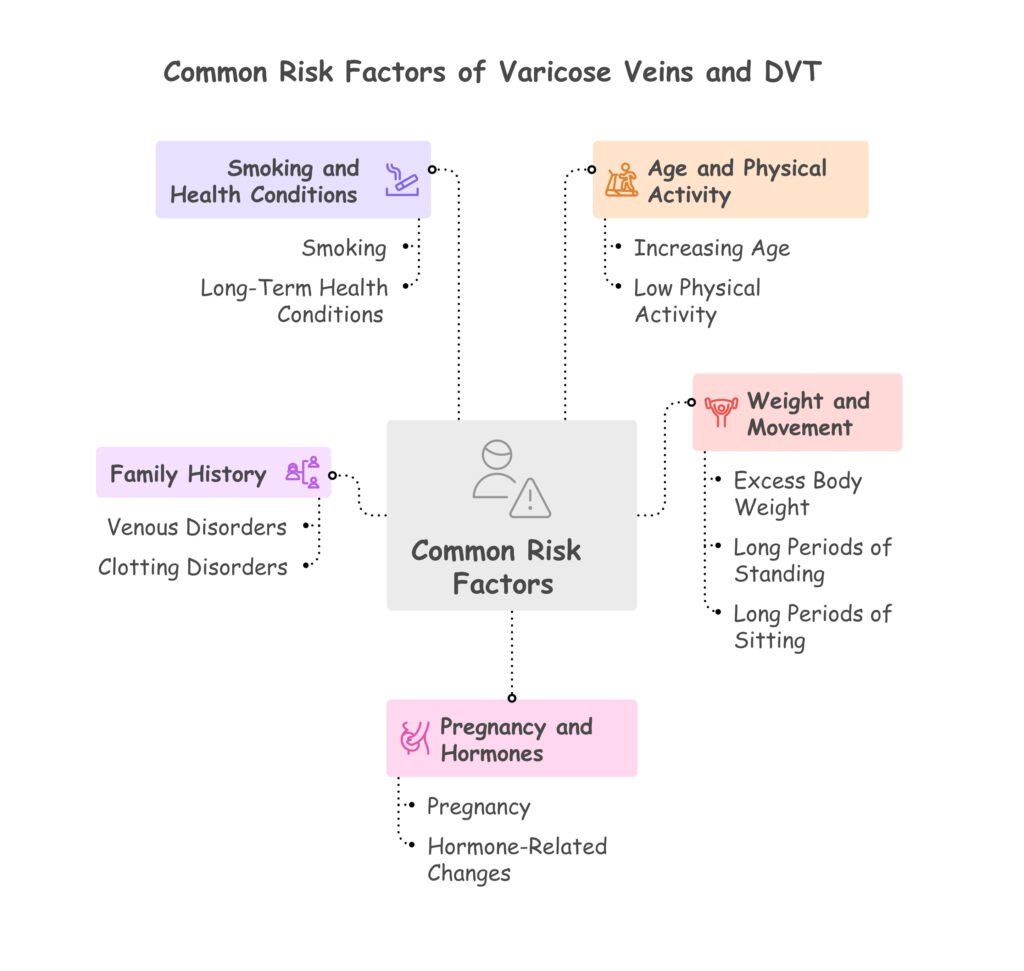
When several of these factors occur together, their effects can add up, significantly increasing the overall risk of clot formation.
Treatment of Varicose Veins and DVT
Management strategies differ because varicose veins and DVT affect different parts of the venous system.
DVT Treatment
DVT treatment aims to stop clot growth, prevent PE and reduce the risk of recurrence. Depending on the severity, a combination of treatment strategies, like medications and/or surgery, may be needed.
- Anticoagulants (blood thinners): The first line of treatment to prevent the clot from growing and reduce the chance of recurrence.
- Thrombolysis or Thrombectomy: Performed in more severe cases, to break down or remove the clot.
- IVC Filter: When anticoagulants are not a safe option for the patient, an IVC (Inferior Vena Cava) filter may be inserted to prevent clots from travelling to the lungs.
- Compression stockings: Recommended alongside medical treatment to reduce swelling and improve circulation.
Varicose Veins Treatment
Varicose vein treatments aim to close or remove damaged veins and relieve symptoms such as pain & swelling, using minimally invasive, day-care procedures.
The most popular treatments include:
- Endovenous laser therapy: laser delivers heat to close faulty veins
- Foam sclerotherapy: injecting medical-grade foam to collapse veins
- VenaSeal glue ablation: injecting medical-grade glue to collapse veins
Treatment approaches are primarily dependent on the severity of symptoms, varicose veins staging and patient preferences. Early varicose veins can be managed with compression stockings, exercise and leg elevation. Minimally invasive procedures such as laser/radiofrequency (EVLA, RFA), sclerotherapy or VenaSeal are planned as needed.
Consultation with a vascular surgeon is recommended for efficient treatment planning and best results.
Difference Between DVT and Varicose Veins Stockings
Compression stockings used for DVT prevention and varicose vein management serve different clinical purposes.
| Feature | DVT Prevention Stockings (TED) | Varicose Vein Compression Stockings |
|---|---|---|
| Primary purpose | Prevent deep vein clots in immobile patients | Support venous return and relieve symptoms |
| Typical users | Bedridden or hospitalised patients | Mobile patients with venous insufficiency |
| Compression level | Lighter pressure (15–21 mmHg) | Higher graduated pressure (18–32 mmHg or more) |
| Design | Light fabric, white, toe inspection opening | Denser material, everyday wear designs |
| Clinical guidance | Short-term use under supervision | Prescribed for daily therapeutic use |
Properly fitting compression stockings are essential for desired outcomes.
Take Home Message
Varicose veins and DVT are separate venous conditions, but evidence shows an important connection between them, particularly in advanced disease or when other risk factors are present.
Most patients with mild varicose veins never develop DVT. However, recognising symptoms, managing risk factors and seeking timely vascular care are important steps in preventing serious complications.
FAQs
What Are the Early Warning Signs of DVT?
Early signs of DVT are swelling, calf tightness and persistent pain or tenderness in one leg that may feel like a cramp and worsen with walking. The affected leg feels warm, appears red or discoloured and superficial veins look more prominent.
DVT can be silent, but combined swelling and pain require prompt medical assistance. Seek immediate care if symptoms of pulmonary embolism develop, such as:
- Sudden shortness of breath
- Chest pain
- Rapid heartbeat
- Dizziness
- Coughing up blood
What Are the 5 Strongest Risk Factors for DVT?
Certain medical conditions and lifestyle factors can significantly increase the likelihood of developing DVT, particularly when they affect blood flow or clotting balance.
- Previous DVT or Pulmonary Embolism (PE): A prior clot is one of the strongest predictors of recurrence.
- Advanced age: Risk rises significantly after 40 due to reduced vein elasticity and reduced mobility.
- Active cancer or chemotherapy: Some cancers and their treatments can increase the risk of clotting.
- Major surgery or trauma: Especially orthopaedic procedures like knee replacement or hip replacement surgeries; vessel injury and temporary immobility increase risk.
- Prolonged immobility: Long hospital stays, bed rest or long-distance travel slow circulation and favour clot formation.
Why Are Varicose Veins a Sign of Blood Clots Formation?
Varicose veins increase the risk of blood clots because they cause chronic venous insufficiency, a condition where faulty vein valves allow blood to pool in the legs. This sluggish circulation, called venous stasis, promotes clot formation by enabling platelets and clotting factors to accumulate.
Most clots in varicose veins are superficial and typically not life-threatening. However, advanced or untreated venous disease can increase the risk of DVT, a clot in deep vein that may lead to PE if left untreated.
How to Prevent Varicose Veins and DVT?
Preventing varicose veins and DVT focuses on improving circulation and reducing prolonged venous pressure in the legs.
- Stay physically active: Regular walking, cycling or swimming supports healthy blood flow by activating calf pump.
- Avoid prolonged sitting or standing: Take movement breaks during work or long travel; perform heel raises when seated.
- Maintain a healthy weight: Reduces pressure on leg veins.
- Elevate legs when resting: Helps lower venous pressure and swelling.
- Wear compression stockings, if advised: Especially during travel, pregnancy or post-surgery.
- Stop smoking and stay hydrated: Supports vascular health and reduces clotting risk
Early signs of DVT are swelling, calf tightness and persistent pain or tenderness in one leg that may feel like a cramp and worsen with walking. The affected leg feels warm, appears red or discoloured and superficial veins look more prominent.
DVT can be silent, but combined swelling and pain require prompt medical assistance. Seek immediate care if symptoms of pulmonary embolism develop, such as:
- Sudden shortness of breath
- Chest pain
- Rapid heartbeat
- Dizziness
- Coughing up blood
Certain medical conditions and lifestyle factors can significantly increase the likelihood of developing DVT, particularly when they affect blood flow or clotting balance.
- Previous DVT or Pulmonary Embolism (PE): A prior clot is one of the strongest predictors of recurrence.
- Advanced age: Risk rises significantly after 40 due to reduced vein elasticity and reduced mobility.
- Active cancer or chemotherapy: Some cancers and their treatments can increase the risk of clotting.
- Major surgery or trauma: Especially orthopaedic procedures like knee replacement or hip replacement surgeries; vessel injury and temporary immobility increase risk.
- Prolonged immobility: Long hospital stays, bed rest or long-distance travel slow circulation and favour clot formation.
Varicose veins increase the risk of blood clots because they cause chronic venous insufficiency, a condition where faulty vein valves allow blood to pool in the legs. This sluggish circulation, called venous stasis, promotes clot formation by enabling platelets and clotting factors to accumulate.
Most clots in varicose veins are superficial and typically not life-threatening. However, advanced or untreated venous disease can increase the risk of DVT, a clot in deep vein that may lead to PE if left untreated.