Quick Answer
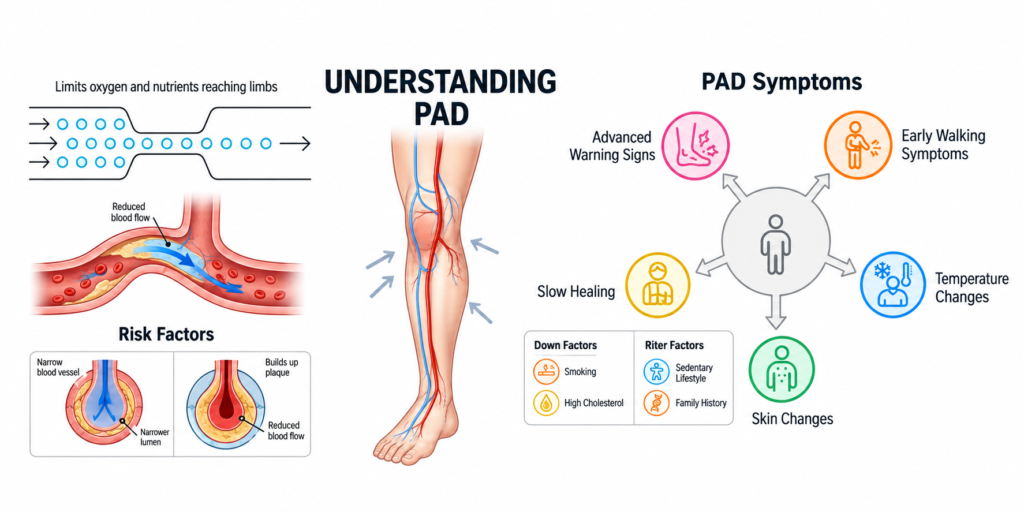
- Plaque Build-Up Inside Arteries: PAD develops when fatty plaque builds up inside the arteries, narrowing them and reducing blood flow to the legs and feet.
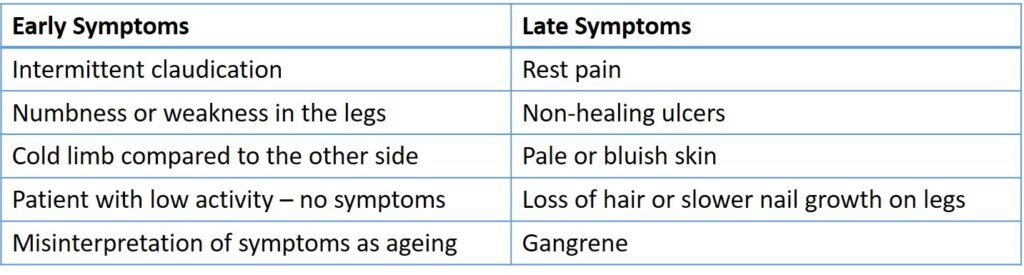
- Early Symptoms: Leg pain, cramping or heaviness during walking that improves with rest.
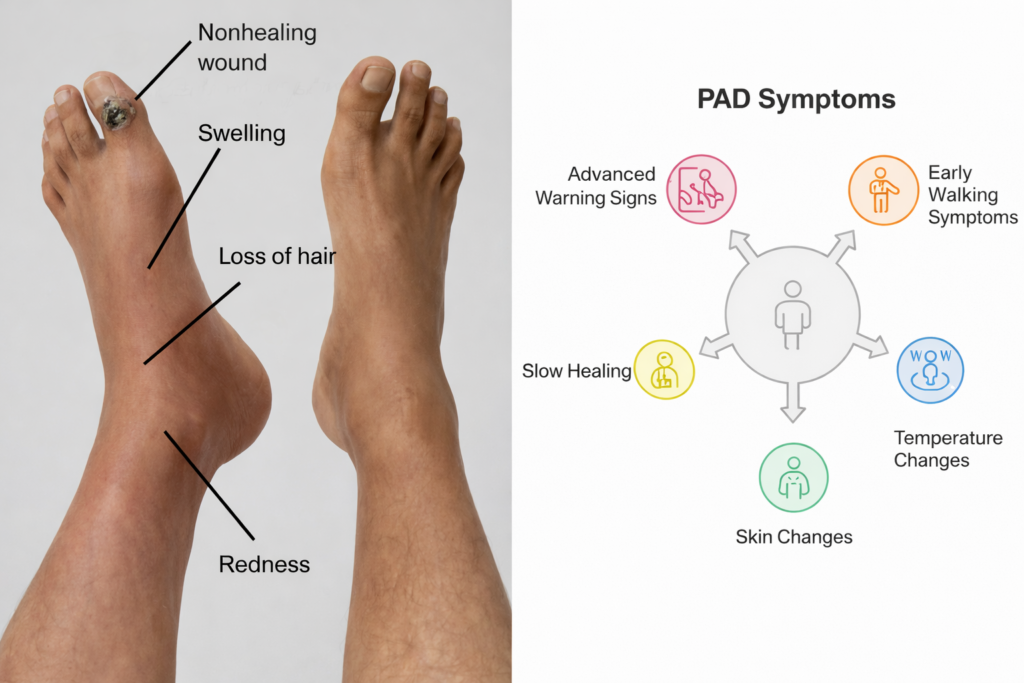
- Circulation-Related Changes: Cold feet, pale or bluish skin, slow hair and nail growth.
- Warning Signs of Progression: Rest pain, numbness or non-healing sores on the feet or toes.
- Why Symptoms Matter: PAD is an indication of widespread vascular disease and signals higher cardiovascular risk.
Symptoms of Peripheral arterial disease (PAD) arise due to reduced blood flow to the legs and feet, most commonly caused by the buildup of atherosclerotic plaque.
Early symptoms may be mild or absent, but progression can lead to pain at rest, ulcers, infections and limb-threatening ischaemia. Recognising PAD symptoms early allows timely diagnosis and intervention, reducing complications.
PAD is a condition in which arteries supplying oxygen & nutrition to the legs/arms become narrowed or blocked. People at higher risk include those with diabetes, smoking history, high blood pressure, high cholesterol, obesity and advancing age.
The most common cause of PAD is atherosclerosis, where cholesterol-rich plaque builds up inside arterial walls.
While PAD mainly affects the legs, it is a systemic vascular condition, meaning people with PAD often have narrowing in other arteries as well.
Peripheral artery disease commonly coexists with:
- Coronary artery disease of the heart
- Cerebrovascular disease of the brain
- Carotid artery disease neck arteries
- Erectile dysfunction or male infertility due to PAD of the groin area
PAD may remain silent in its early stages, with symptoms appearing only as blood flow becomes more restricted.
What is Peripheral Artery Disease?
Intermittent Claudication
Changes in Toenail and Hair Growth
Coldness in One Foot or Lower Leg
Skin Colour Changes in the Legs or Feet
Leg Weakness, Numbness or Pins-and-Needles Sensation
Rest Pain in the Legs or Feet (Critical Limb Ischaemia)
Complications of Peripheral Artery Disease
- Critical limb ischaemia: Persistent rest pain, ulcers or gangrene due to severe blood flow reduction.
- Infections: Poor circulation weakens the immune response, allowing minor wounds to become infected.
- Limb-threatening damage: Advanced disease may require amputation if tissue death occurs.
- Stroke risk: PAD often coexists with carotid artery disease, increasing stroke risk.
- Heart attack risk: Atherosclerosis affecting leg arteries commonly involves the coronary arteries as well.
- Reduced mobility and quality of life: Chronic pain limits walking capacity and daily activities.
First Warning Signs of Peripheral Artery Disease
- Leg cramping or heaviness during walking that resolves with rest
- Coldness or colour changes in one foot
- Reduced hair growth on the legs
- Mild numbness or tingling in the feet
Diagnosis of Peripheral Artery Disease
- Ankle–Brachial Index (ABI): Compares blood pressure in the ankle and arm. An ABI of 0.90 or less confirms PAD.
- Doppler or Duplex Ultrasound: Assesses blood flow and identifies arterial narrowing in the legs.
- CT Angiography (CTA) or MR Angiography (MRA): Provides detailed arterial mapping when planning interventions.
- Physical examination: Weak or absent pulses, skin changes and delayed capillary refill support the diagnosis.
- Risk factor assessment: Diabetes, cholesterol levels, smoking history and blood pressure are evaluated.
Treatment for Peripheral Artery Disease
- Risk-factor modification: Quitting smoking, controlling diabetes, managing blood pressure and lowering cholesterol.
- Exercise therapy: Regular walking and exercise improves circulation and increase pain-free walking distance.
- Medications: Antiplatelet drugs, statins and vasodilators such as cilostazol when appropriate.
- Revascularisation: Angioplasty, stenting or bypass surgery for significant arterial blockages.
- Wound care: Early management of ulcers prevents infection and limb loss.
- Long-term monitoring: Ongoing surveillance reduces recurrence and progression.
Take Home Message
FAQs
What Are the Symptoms of a Blocked Artery in the Lower Leg?
The symptoms of a blocked artery in the lower leg include cramping or aching pain during walking that improves with rest. The foot or leg may feel colder than usual.
Skin colour may appear pale or bluish. Pulses can feel weak and small cuts or sores may heal slowly due to poor blood flow
What Happens if PAD Is Left Untreated?
If PAD is not treated, reduced blood flow can progress to critical limb ischaemia. This may cause constant pain, non-healing ulcers, infections or gangrene.
Severe cases can lead to limb amputation. Because PAD reflects widespread arterial disease, it also increases the long-term risk of stroke and heart attack.
When To See a Doctor for Peripheral Artery Disease?
Varicose veins can be permanently treated by closing or removing the faulty veins responsible for blood pooling. Damaged vein valves do not repair or heal on their own, which is why creams, tablets, or home remedies cannot cure varicose veins
- Endovenous Laser Ablation (EVLA) and Radiofrequency Ablation (RFA) are the most effective treatments for permanently closing diseased veins, with high long-term success rates.
- Sclerotherapy is used for smaller or residual veins
- VenaSeal or a medical adhesive may be used in selected cases
- Surgery (ligation and stripping) is now rarely required
Once treated, the affected vein does not return. However, since valve weakness may persist and varicose veins can be progressive, new veins can develop over time. This progression can be slowed with preventive measures such as regular walking, weight control, leg elevation, and avoiding prolonged standing or sitting.
A duplex ultrasound evaluation by a qualified vascular specialist is essential to ensure complete treatment, durable results, and low recurrence.