Compression stockings for varicose veins: Specialised elastic garments designed to improve circulation in the legs affected by venous insufficiency.
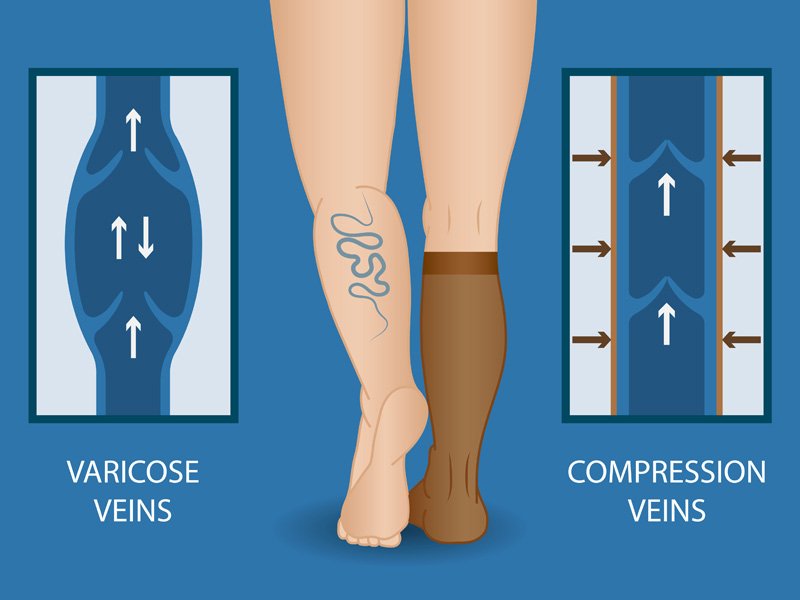
Graduated pressure design: They apply the highest pressure at the ankle and gradually reduce compression towards the calf and thigh.
Clinically recommended pressure: A compression range of 20-30 mmHg is commonly advised for symptomatic varicose veins.
Part of modern vein care: Recommended for symptom control and after minimally invasive treatments for varicose veins & DVT.
Symptom management: When worn for 8-12 hrs a day, they reduce swelling and discomfort but do not remove the underlying damaged veins.
Synopsis
Varicose vein compression stockings apply graduated pressure to the legs to reduce venous pooling and improve blood circulation.
Vascular surgeons advise compression stockings for everyday symptom relief, during pregnancy, for long travel or after procedures such as laser vein treatment.
Adequate compression strength and accurate fitting are essential to ensure its effectiveness.
Compression Stockings for Varicose Veins
Varicose vein stockings are medical-grade elastic garments designed to support leg veins and improve circulation in people with chronic venous disease.
This helps push blood upward toward the heart instead of allowing it to pool in the legs.
How do Varicose Vein Stockings Work?
Unlike regular socks, these stockings deliver graduated compression, meaning the pressure is strongest at the ankle and gradually decreases as it moves up.
The compression stockings help in several ways:
Improving venous return: Pressure pushes blood upward, preventing pooling in the lower legs.
Reducing swelling: Compression limits fluid buildup in surrounding tissues.
Supporting weakened veins: External pressure helps vein valves function more efficiently.
Relieving symptoms: Many patients experience reduced leg heaviness, fatigue and aching.
Consistent use can significantly improve comfort for patients with varicose veins, especially during prolonged standing or sitting.
Who Needs Compression Stockings?
Vascular surgeons commonly recommend stockings across multiple stages of chronic venous disease (CVD) seen in the form of symptomatic varicose veins.
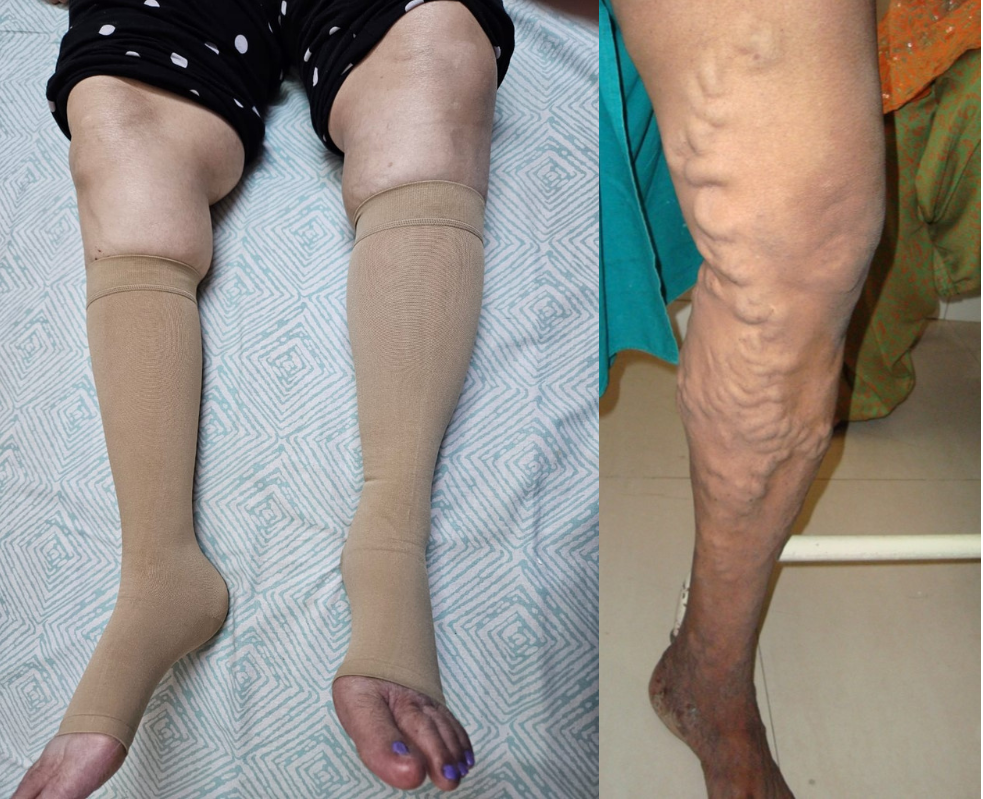
Symptomatic varicose veins (Stage 2): Reduces leg heaviness, aching, and fatigue by improving venous blood flow.
Venous oedema (Stage 3): Helps control leg swelling by limiting fluid accumulation in the lower limbs.
Venous skin changes (Stage 4): Improves skin microcirculation and helps protect against pigmentation, eczema, and lipodermatosclerosis.
Venous leg ulcers (Stage 5–6): Promotes healing of active ulcers by improving venous return and tissue oxygenation. Also reduces the risk of ulcer recurrence.
Persistent symptoms after venous procedures: Relieves ongoing swelling, discomfort, or heaviness after vein treatments.
Post-op care for varicose vein treatment: Reduces swelling and complications while improving recovery after endovascular procedures.
They are also prescribed after endovascular vein procedures such as laser ablation or sclerotherapy to support healing and maintain vein closure.
Types of Compression Stockings
Several types of compression stockings are available for managing varicose veins, and the right choice depends on the severity of the condition, activity level, and medical advice.
Graduated Compression Stockings
Most commonly prescribed for varicose veins.
Apply maximum pressure at the ankle with gradually decreasing compression up the leg.
Available in knee-high, thigh-high, and pantyhose styles, depending on the area needing support.
Anti-Embolism Stockings
Designed for people who are bedridden, post-surgery, or have limited mobility.
Provide lower compression to help prevent blood clots.
Usually not sufficient for treating moderate or severe varicose veins.
Non-Medical Support Hosiery
Over-the-counter stockings that provide mild compression.
May help reduce minor leg fatigue or mild swelling.
Not customised, hence not enough to manage established varicose veins.
Custom-Made Compression Stockings
Tailored to individual leg measurements to ensure they fit properly.
Ensure accurate compression levels and better comfort.
Often recommended for patients with early-stage varicose veins to prevent progression.
How To Choose the Right Compression Stockings?
The choice of stockings should ideally be guided by your vascular surgeon, who will determine the required compression level based on your symptoms and vein condition.
The vascular specialist considers several factors.
Clinical evaluation: A doctor may assess circulation and perform a venous ultrasound to confirm venous reflux.
Compression level required: The severity of symptoms such as swelling, pain or skin changes helps determine the required compression strength.
Accurate leg measurements: Proper fitting is essential because stockings that are too tight or too loose may reduce effectiveness.
Comfort and usability: Fabric quality, climate suitability and ease of wearing can influence whether patients use stockings regularly.
When choosing compression stockings for varicose veins, accurate measurement is far more important than the brand, whether Sogren, Flamingo, Vissco, Tynor, or Sigvaris.
Accurate measurement ensures uniform pressure distribution and symptom relief.
Here’s a detailed guide on how to choose the correct size.
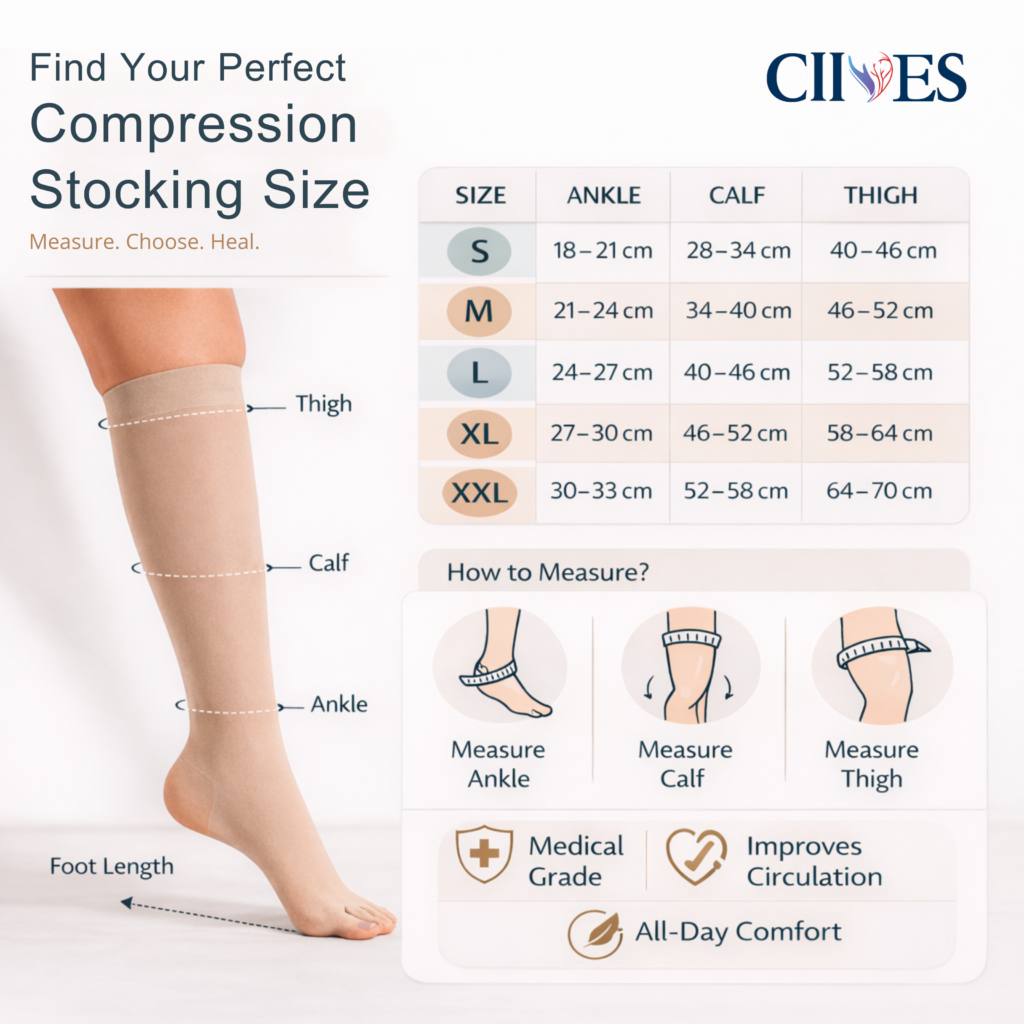
Varicose Vein Stockings: Size Chart & Guide
Measurements should ideally be taken in the morning, when leg swelling is minimal.
Step 1: Measure the Ankle
The ankle is measured at its narrowest point just above the ankle bones.
This measurement is the most important because compression stockings apply the highest pressure at the ankle, which forms the starting point for the compression gradient.
Step 2: Measure the Calf
The calf should be measured at the widest part of the muscle.
This ensures the stocking fits snugly without excessive tightness and maintains the correct pressure gradient from ankle to calf.
Step 3: Measure the Leg Length
For below-knee stockings, measure from the floor to about 2 fingerbreadths below the knee crease.
For thigh-high stockings, measure from the floor to the upper thigh where the stocking will end.
Incorrect sizing may lead to reduced effectiveness, discomfort or skin irritation, which is why professional fitting is often recommended.
How Many Hours a Day Should Compression Stockings Be Worn?
For the best results, compression stockings for varicose veins should usually be worn throughout the day: for 8–12 hours or during the entire period you are upright.
It is best to put them on in the morning, before getting out of bed or soon after waking up, when leg swelling is minimal.
Wearing them during daily activities helps reduce heaviness or swelling. You can remove the compression stockings at night before sleeping.
Benefits of Varicose Vein Stockings
Compression stockings provide the following benefits for patients:
Reduced leg heaviness and fatigue
Lower swelling levels
Slower disease progression
Post-procedure support, maintain vein closure
Prevention of complications like venous ulcers
These benefits make compression therapy an indispensable part of non-surgical vein care.
What Are the Side Effects of Wearing Stockings?
Compression stockings are generally safe, but some patients may experience minor side effects.
Skin irritation: Warm climates may cause mild itching or skin dryness.
Excessive tightness: Incorrect sizing causes discomfort or pressure marks on the skin.
Circulatory concerns in certain conditions: Patients with PAD should consult a doctor before using compression stockings.
Regularly checking the skin for redness, irritation or pressure marks helps prevent complications.
Take Home Message
Varicose vein stockings are recommended for chronic venous disease to improve venous blood flow, reduce leg swelling, and support skin health.
It is commonly used for symptomatic varicose veins, venous oedema, skin changes, and venous leg ulcers, and is also advised after varicose vein procedures to reduce complications and promote healing.
However, they do not remove or reverse damaged veins. Patients with persistent symptoms may require evaluation to explore additional treatment options.
FAQs
Which Brands Are Recommended for Compression Stockings?
Several medical-grade compression stocking brands are widely available in India, including Flamingo, Vissco, Tynor and Sigvaris. However, the most important factor is the compression level, not the brand itself.
A vascular surgeon can recommend the appropriate pressure strength and stocking type based on the patient’s condition.
What Are the Alternative Treatment Options for Varicose Veins?
Patients with persistent or severe varicose veins may benefit from minimally invasive procedures.
Endovenous laser ablation (EVLA) uses heat energy to close the affected vein.
Radiofrequency ablation (RFA) treats veins using controlled thermal energy.
VenaSeal glue ablation uses a medical adhesive to seal the diseased vein, allowing blood to reroute through healthier veins without heat-based treatment.
Foam sclerotherapy seals smaller veins through an injectable solution.
Traditional surgery is now rarely required and is usually reserved for complex cases.
Can I Sleep With Varicose Vein Stockings?
Most patients do not need overnight compression because blood circulation improves naturally while lying down. Compression stockings are usually worn during the day and removed before sleeping.
However, in certain medical situations, a doctor may recommend extended wear. Follow your doctor’s advice regarding the duration of use.
Several medical-grade compression stocking brands are widely available in India, including Flamingo, Vissco, Tynor and Sigvaris. However, the most important factor is the compression level, not the brand itself.
A vascular surgeon can recommend the appropriate pressure strength and stocking type based on the patient’s condition.
Patients with persistent or severe varicose veins may benefit from minimally invasive procedures.
Endovenous laser ablation (EVLA) uses heat energy to close the affected vein.
Radiofrequency ablation (RFA) treats veins using controlled thermal energy.
VenaSeal glue ablation uses a medical adhesive to seal the diseased vein, allowing blood to reroute through healthier veins without heat-based treatment.
Foam sclerotherapy seals smaller veins through an injectable solution.
Traditional surgery is now rarely required and is usually reserved for complex cases.
Most patients do not need overnight compression because blood circulation improves naturally while lying down. Compression stockings are usually worn during the day and removed before sleeping.
However, in certain medical situations, a doctor may recommend extended wear. Follow your doctor’s advice regarding the duration of use.