Stages of Varicose Veins

Varicose veins rarely appear overnight; they progress gradually, often over years, through recognisable clinical stages. Understanding this progression, medically classified as C1-C6 under the CEAP system, helps patients recognise the early stages of varicose veins and seek timely care before the condition progresses to skin damage or ulcers.
Varicose Veins vs Spider Veins: Differences, Causes & Treatments

Spider veins and varicose veins are common vein conditions in the Nagpur region, and at CIIVES, they account for one in three OPD consultations. Although they may appear similar, they differ significantly in size, symptoms, clinical significance and treatment requirements.
Visible Veins on Legs
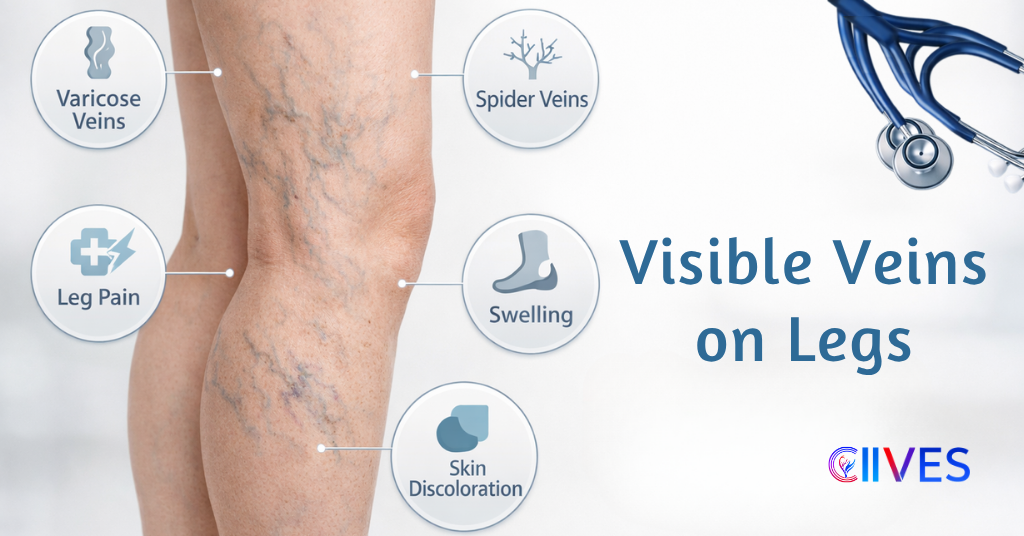
Visible veins on legs: Can be small spider veins or bulging, twisted varicose veins; indicate venous circulation issues in the legs.
Compression Stockings For Varicose Veins

Compression stockings for varicose veins: Specialised elastic garments designed to improve circulation in the legs affected by venous insufficiency.
Laser Treatment for Varicose Veins

Laser for varicose veins is an established, ultrasound-guided procedure that uses a laser fibre to deliver heat and close the problematic veins. By sealing the affected vein from within, it improves circulation and relieves symptoms such as pain, heaviness and swelling. With strong clinical success rates and short recovery time.
What Is Varicose Veins?
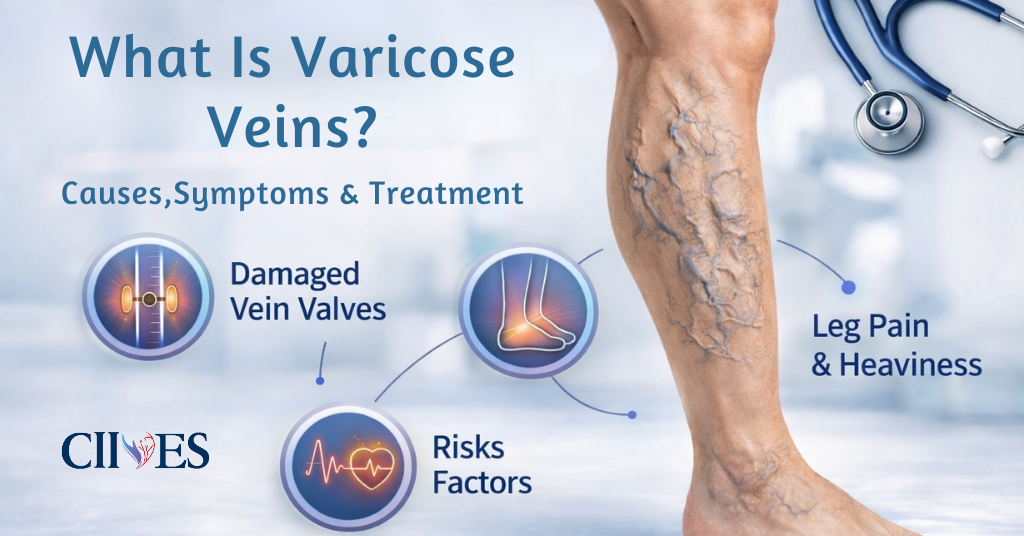
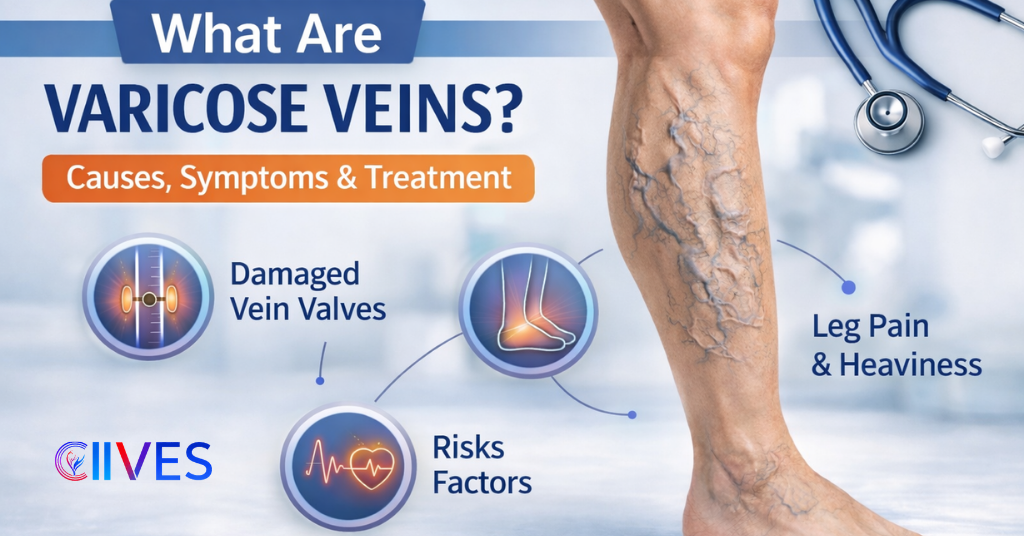
Varicose veins are enlarged, twisted superficial veins that develop due to chronic venous insufficiency, a condition in which leg veins cannot return blood efficiently to the heart. Varicose veins are a sign of an underlying circulation problem, just like fever or chest pain is a sign of an underlying health issue.
Varicose Veins Treatment: Laser vs VenaSeal vs Sclerotherapy
Modern varicose vein treatment options are safe, quick, and minimally invasive, offering minimal discomfort and a faster recovery. Early-stage varicose veins can be managed with conservative approaches, such as lifestyle modifications, compression stockings, or sclerotherapy.
Varicose Veins: Causes & Risk Factors

Varicose” means something that is abnormally swollen or enlarged. Varicose veins are deep vessels of the leg that have become swollen, twisted, and visibly raised. They commonly appear bluish or purple because the veins carry deoxygenated blood and most often affect the legs, where blood has to flow against gravity.
Symptoms of Varicose Veins

When vein valves fail, blood flows backwards and pools in the veins. Over time, this causes the vein walls to stretch, making them varicosed: twisted and swollen.