Table of Contents
-
1. Snapshot
-
2. What are Varicose Veins?
-
3. Varicose Veins Symptoms
-
4. Night Cramps or Throbbing Pain
-
5. What Are the Symptoms of Varicose Veins in the Testicles?
-
6. What Happens if a Varicocele Is Left Untreated?
-
7. How Are Varicose Veins Diagnosed?
-
8. Treatment for Varicose Veins
-
9. Take Home Message
-
10. FAQs
Snapshot
- How they appear: Enlarged, bulging and twisted veins are often visible on the legs, thighs or ankles, showing a bluish or purplish hue.
- What you may feel: A dull ache, heaviness or throbbing in the legs, especially after standing or sitting for long periods.
- Warning sensations: Itching, burning or night cramps that worsen with fatigue or humid weather.
- Skin changes: Discolouration, dryness or thickening around affected veins, which may signal advanced venous disease.
- When to act: Persistent swelling, tenderness or sores around the ankles may indicate chronic venous insufficiency and need medical evaluation.
Varicose veins symptoms don’t always present with pain; they often begin as subtle signs like leg heaviness, itching or visible bluish veins.
This guide explains how to recognise early and advanced symptoms and when to consult a vascular specialist for timely diagnosis and care.
What are Varicose Veins?
When vein valves fail, blood flows backwards and pools in the veins. Over time, this causes the vein walls to stretch, making them varicosed: twisted and swollen.
Varicose Veins Symptoms
The symptoms of varicose veins can vary depending on:
- Degree of vein damage
- Efficiency of circulation
- Lifestyle factors.
The symptoms begin with discomfort or spidery veins appearing on the leg and lead to bulging veins and even nonhealing venous ulcers as the disease progresses.
While varicose veins are not a disease in themselves, they are a sign that indicates chronic venous disease (CVD), a condition where veins become inefficient.
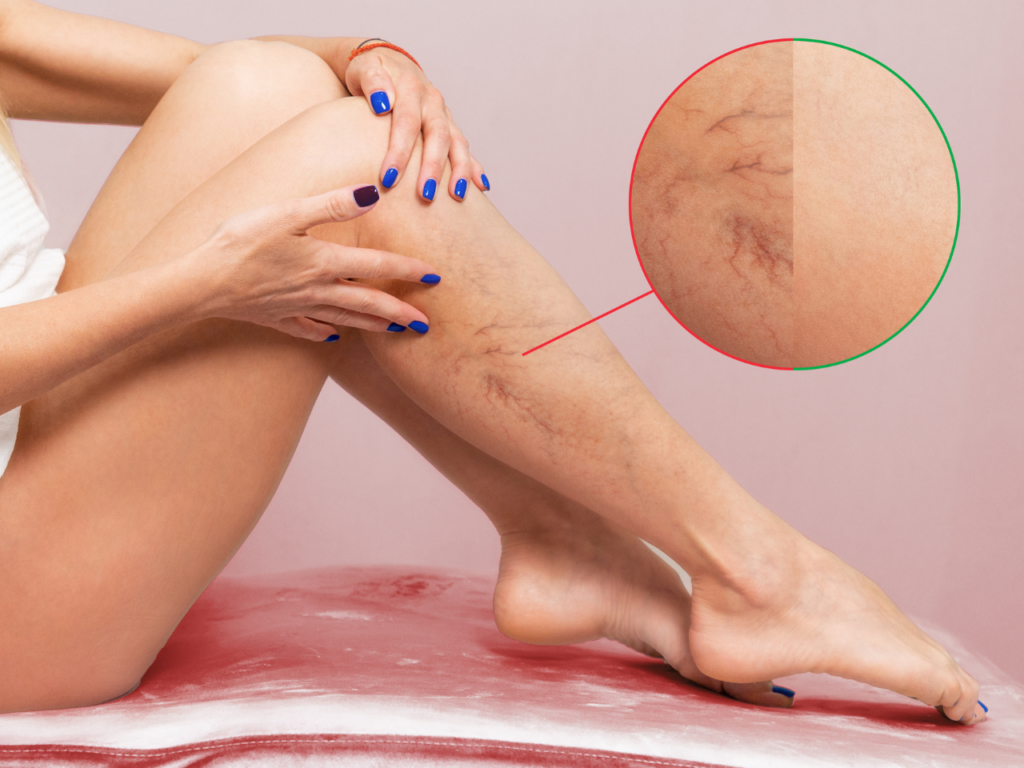
1. Spider Veins
Spider veins are fine, web-like, bluish or purple veins that appear near the surface of the skin, especially on the thighs and calves.
They may also be seen around frank varicose veins and indicate early-stage venous insufficiency. Although usually painless, their presence suggests increased pressure in nearby veins.
If you have spider veins, exercise regularly, avoid prolonged sitting or standing and flex your feet and ankles to boost circulation.
2. Visible Twisted or Bulging Veins
These are the enlarged, rope-like, bluish or purplish veins and are called varicose veins. They stand out beneath the skin.
They are caused by blood pooling in the deep leg veins due to valve incompetence, typically worsening after prolonged standing or walking.
Early lifestyle changes, like regular walking, leg elevation, and compression therapy, can help slow progression and relieve discomfort.
3. Leg Heaviness or Aching
Often, the first varicose vein symptom in most patients is a dull, heavy or aching sensation in the legs. This occurs when blood stagnates in the lower limbs, increasing venous pressure.
The discomfort often intensifies after long hours of standing or sitting and improves when the legs are elevated or supported with compression stockings.
4. Swelling in the Lower Leg
When the veins cannot effectively return blood to the heart, fluid leaks into surrounding tissues, leading to swelling (edema) in the feet, ankles or calves.
Swelling often worsens toward the evening or during hot & humid weather and may be an early sign of chronic venous insufficiency.
Persistent swelling warrants medical evaluation to prevent skin changes or ulceration.
5. Itching or Burning Sensation Around Affected Veins
Poor circulation and inflammation can cause itching, burning or irritation around varicose veins. This symptom occurs because trapped blood increases skin sensitivity and dryness.
Repeated scratching can lead to minor wounds, infections or even stasis dermatitis, a common skin complication of venous disease
6. Discolouration or Skin Thickening
In long-standing varicose veins, chronic venous hypertension causes blood to leak out of the small vessels into the surrounding tissues. The red blood cells break down, releasing iron that deposits in the skin as hemosiderin, leading to reddish-brown or bluish discolouration, most commonly near the ankles.
Over time, ongoing inflammation and fibrosis can lead to lipodermatosclerosis, characterised by the skin becoming hard, thickened, and tender, often resulting in an “inverted champagne bottle” appearance on the lower leg.
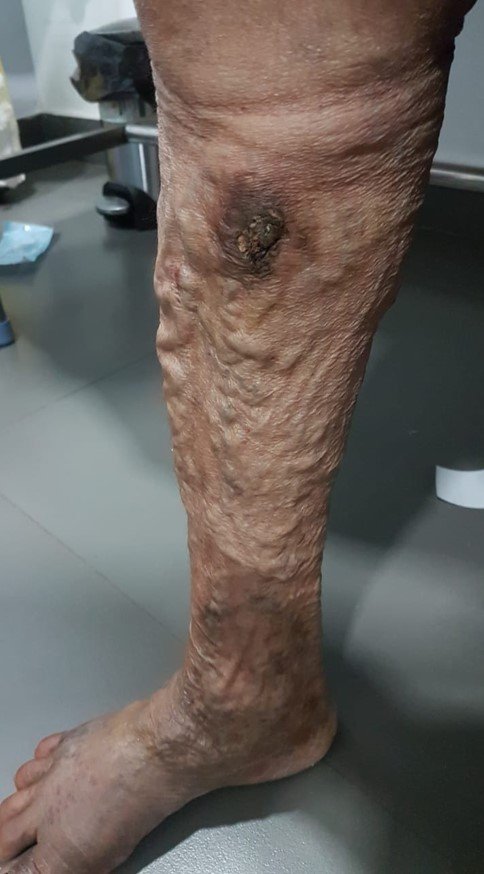
These changes indicate an advanced stage and increase the risk of developing venous ulcers if not managed early.
Night Cramps or Throbbing Pain
Many people with varicose veins experience night-time leg cramps, throbbing, or a restless sensation, especially after long periods of standing or sitting.
Since varicose veins affect the return of blood to the heart, waste products like carbon dioxide and metabolic toxins may accumulate in the leg muscles.
This build-up can irritate tissues and trigger painful spasms. Gentle exercise, leg massage or elevating the legs before bed can help relieve these varicose vein symptoms.
What Are the Symptoms of Varicose Veins in the Testicles?
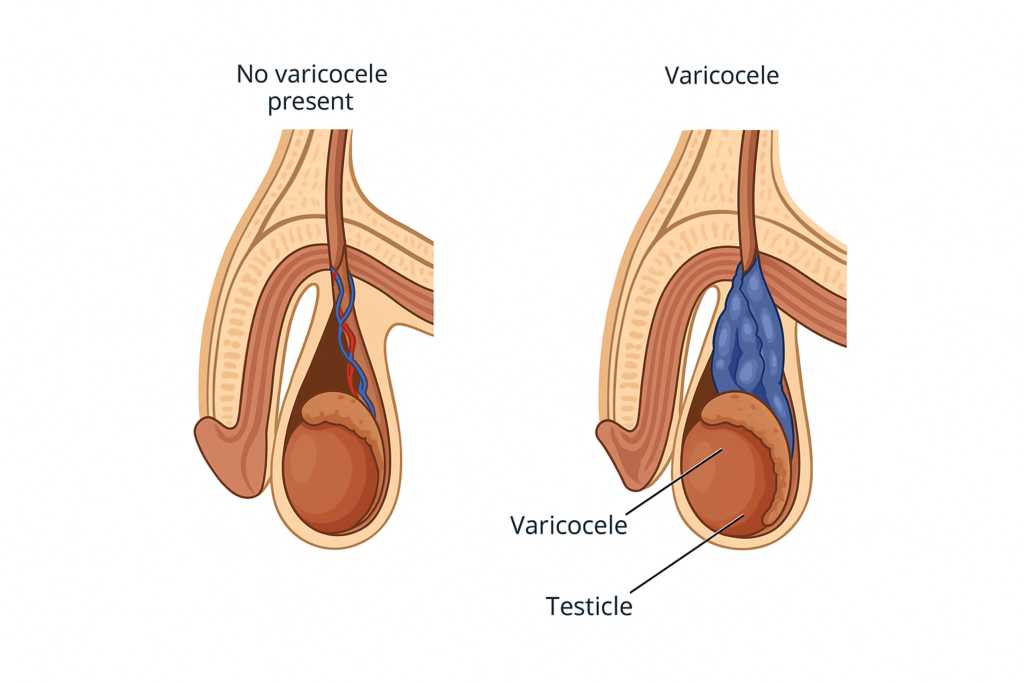
When varicose veins affect the scrotum, the condition is known as a varicocele. It results from enlarged veins within the spermatic cord, similar to varicose veins in the legs.
Typical varicocele symptoms include:
- A dull, aching pain or heaviness in the scrotum, often worsening after standing or physical exertion.
- A visible or palpable “bag of worms” texture on the affected scrotum.
- Mild swelling or discomfort that improves when lying down.
What Happens if a Varicocele Is Left Untreated?
Untreated varicocele may cause testicular shrinkage (atrophy) and reduced sperm quality, potentially affecting male fertility. Chronic discomfort or pain may persist.
Early diagnosis and treatment can help prevent long-term reproductive complications.
How Are Varicose Veins Diagnosed?
Diagnosis begins with a clinical examination by a vascular surgeon, who evaluates visible veins, skin changes and swelling.
A Doppler ultrasound is then used to assess blood flow and valve function. It provides detailed imaging to detect reflux or deep vein involvement.
These diagnostic tools help determine the severity and treatment approach for each patient.
Treatment for Varicose Veins
Treatment options depend on the severity of varicose vein symptoms, the extent of vein damage and patient preference.
- Compression therapy: Wearing graduated compression stockings improves blood return, relieves pain and reduces swelling.
- Sclerotherapy: A solution is injected into small veins to seal them off and redirect blood flow to healthy veins.
- Endovenous laser or radiofrequency ablation: Minimally invasive procedures that seal faulty veins using heat energy.
- Ambulatory phlebectomy or vein stripping: Surgical options for large or complex varicose veins.
- Lifestyle measures: Regular walking, maintaining a healthy weight, elevating the legs and avoiding long periods of inactivity all support vein health.
Consulting a qualified vascular specialist ensures a personalised and safe treatment plan for long-term relief.
Take Home Message
Varicose vein symptoms range from visible, twisted veins to discomfort, swelling, itching, and skin changes. While often perceived as cosmetic, they indicate underlying venous insufficiency that can worsen over time. Early diagnosis and timely treatment help relieve symptoms, prevent complications and restore confidence in daily activities.
FAQs
What Are the First Warning Signs of Varicose Veins?
Early signs often include spidery veins or telangiectasias. These are bluish or purple veins that appear just under the skin.
Some people experience a heavy or dull aching sensation after prolonged standing or sitting with/without mild swelling around the ankles.
These symptoms progress gradually as vein valves weaken, leading to visible varicosities over time.
How Can I Get Immediate Relief From Varicose Vein Pain?
Elevate your legs above heart level for 15–20 minutes to reduce pressure and swelling. Wearing compression stockings throughout the day helps improve circulation and relieve discomfort. Short walking breaks, gentle stretching and avoiding sitting or standing for long hours can also help ease symptoms and prevent worsening.
Do Varicose Veins Return After Treatment?
Treated veins do not reappear, but new varicose veins can form if the underlying causes such as poor circulation, inactivity or excess body weight, are not managed. Regular follow-up with a vascular specialist, maintaining a healthy weight and engaging in leg-strengthening exercises can help minimise the risk and maintain long-term results.