Table of Contents
-
1. Snapshot
-
2. What is Endovenous Laser Treatment for Varicose Veins?
-
3. Who Is a Good Candidate for Laser Vein Treatment?
-
4. How to Prepare for Laser Treatment for Varicose Veins
-
5. How is the Process of Laser Treatment for Varicose Veins Performed?
-
6. Recovery after EVLA
-
7. What Are the Alternative Treatment Options Available for Varicose Veins?
-
8. Benefits of Laser Treatment for Varicose Veins
-
9. Risks and Side Effects of Endovenous Laser Treatment?
-
10. What Are Two Drawbacks of Laser Therapy?
-
11. Fact Check
-
12. Why CIIVES for Laser Varicose Veins Surgery?
-
13. Take Home Message
-
14. FAQs
Snapshot
- Procedure Overview: Laser treatment for varicose veins (EVLA/EVLT) seals faulty superficial veins using controlled heat energy.
- How It Works: A thin laser fibre is inserted under ultrasound guidance to close the diseased vein and redirect blood to healthy veins.
- Benefits: Performed under local anaesthesia without incisions, leading to less pain and minimal scarring; high success rate (~90-98%)
- Recovery: Patients can walk immediately after treatment, with most resuming routine activities within 24-48 hours.
- Ideal Candidates: Patients with symptomatic veins.
- Side effects: Temporary bruising or tightness may occur, while major complications are rare when performed by experienced vascular specialists.
Laser treatment for varicose veins is an established, ultrasound-guided procedure that uses a laser fibre to deliver heat and close the problematic veins. By sealing the affected vein from within, it improves circulation and relieves symptoms such as pain, heaviness and swelling. With strong clinical success rates and short recovery time, Endovenous Laser Ablation (EVLA) has replaced open surgery in most patients. Careful patient selection, ultrasound evaluation and post-procedure follow-up are essential for safe outcomes and long-term vein health.
What is Endovenous Laser Treatment for Varicose Veins?
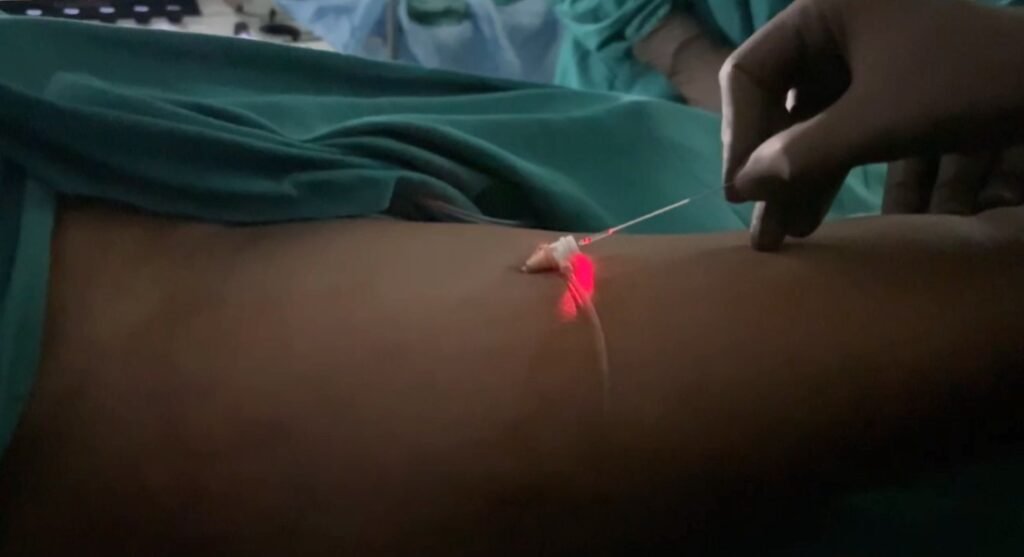
Laser treatment for varicose veins, also called EVLA, is a minimally invasive procedure that closes diseased superficial veins.
- A thin laser fibre is inserted into the faulty vein under ultrasound guidance.
- Controlled heat energy seals the vein wall (laser-assisted endovenous ablation technique).
- Blood flow is naturally redirected to healthy veins.
- Performed under local anaesthesia.
- Typically completed within 30-60 minutes as a day-care procedure.
Clinical studies show long-term vein closure rates of approximately 97% at up to 3 years of follow-up. Treated veins do not “reopen,” though new veins may develop over time due to underlying venous disease.
Who Is a Good Candidate for Laser Vein Treatment
Laser ablation for varicose veins is recommended for patients whose leg veins are not working properly, allowing blood to flow backwards and pool. This condition, called venous reflux, is confirmed by a duplex ultrasound. Ideal candidates include individuals with:
- Leg pain, heaviness, swelling or fatigue due to varicose veins
- Skin pigmentation changes or venous eczema (a type of skin irritation caused by poor blood flow in the veins)
- Non-healing venous ulcers linked to superficial reflux
- Great or small saphenous vein incompetence confirmed on vascular imaging before laser therapy
- Those seeking a minimally invasive varicose vein treatment alternative to open surgery
It may not be recommended for patients with:
- Active deep vein thrombosis (DVT)
- Severe peripheral arterial disease
- Untreated clotting disorders
A vascular surgeon determines eligibility after clinical and ultrasound evaluation.
How to Prepare for Laser Treatment for Varicose Veins
Preparing properly helps ensure safety, smoother recovery and better treatment outcomes. Laser treatment for varicose veins is usually a day-care procedure, but a few important steps are required beforehand.
- Attend a detailed consultation: Your vascular surgeon will explain the procedure, expected results and recovery timeline.
- Share your full medical history: Inform your doctor about previous surgeries, clotting issues or chronic conditions.
- List all medications and supplements: Includes blood thinners, herbal products and over-the-counter drugs. Some medications may need to be paused 1-2 weeks before treatment.
- Discuss allergies: Especially reactions to medications or anaesthesia.
- Quit smoking and limit alcohol: Ideally, a few weeks prior, as it can delay healing.
Following these steps supports a safe and well-planned minimally invasive varicose vein treatment.
How is the Process of Laser Treatment for Varicose Veins Performed?
Understanding the steps involved in laser treatment for varicose veins can help you feel more comfortable and informed before the procedure. Step-by-Step Overview:
- Ultrasound mapping: A duplex ultrasound identifies the faulty vein and guides accurate fibre placement.
- Local anaesthesia for comfort: A numbing solution is injected around the vein to prevent pain and protect surrounding tissue.
- Laser fibre insertion: A thin laser fibre is introduced through a small skin puncture under real-time imaging.
- Laser energy delivery: Controlled heat seals the vein wall, stopping abnormal backward blood flow.
- Vein absorption: The closed vein gradually shrinks and is naturally absorbed by the body over time.
- Compression support: Compression stockings are applied immediately to reduce swelling and support recovery.
Recovery after EVLA
Most patients can walk immediately after the procedure and resume light activities later the same day. Most patients can return to their normal routine in about 1-2 days.
What Are the Alternative Treatment Options Available for Varicose Veins?
Treatment selection depends on anatomy, severity and patient preference.
- Ultrasound-guided foam sclerotherapy: Injection of a medical foam to collapse veins
- Cyanoacrylate glue closure (VenaSeal): Medical adhesive seals the vein without thermal energy
- Radiofrequency ablation (RFA): Heat-based vein closure using radiofrequency energy
- Compression therapy: Used for early-stage disease or symptom control
Open surgical stripping is now less commonly performed due to longer recovery and higher post-operative discomfort.
Benefits of Laser Treatment for Varicose Veins
Laser treatment for varicose veins is safe, effective and allows faster recovery compared to traditional options.
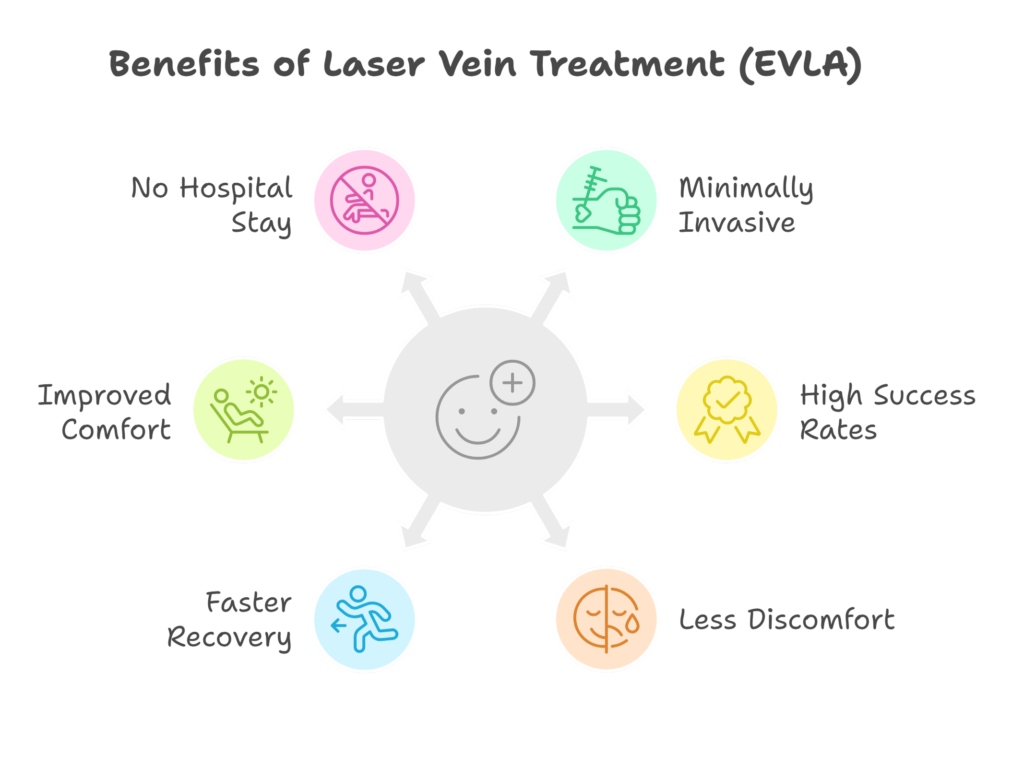
- Minimally invasive approach: Performed through a small skin puncture instead of a surgical cut, leaving little to no visible scar.
- High success rates: Clinical studies report approximately 90-98% vein closure, suggesting a high success rate.
- Less post-procedure discomfort: Most patients experience mild soreness or tightness rather than significant pain.
- Faster recovery: Walking is encouraged immediately, and most people return to routine activities within 1-2 days.
- Improved leg comfort and appearance: Relieves symptoms such as heaviness, swelling and aching while gradually improving visible bulging veins.
- Outpatient convenience: Hospital stay is usually not required, making it a practical, minimally invasive varicose vein treatment option.
Risks and Side Effects of Endovenous Laser Treatment?
EVLT is generally safe when performed by an experienced vascular specialist. However, like any medical procedure, it carries some potential risks. Understanding these helps patients make informed decisions.
- Mild pain or tightness: A pulling sensation along the treated vein is common for a few days and usually settles with walking and compression.
- Bruising and swelling: Temporary bruising at the treatment site is expected and resolves gradually.
- Skin discolouration: Some patients notice mild pigmentation changes along the vein, which typically fade over time.
- Superficial thrombophlebitis: Inflammation of the treated vein may cause redness or tenderness but is usually self-limiting.
- Temporary numbness: Rarely, minor nerve irritation can cause short-term numbness near the treatment area.
- Rare complications: Deep vein thrombosis (DVT), infection or skin burns are uncommon when ultrasound guidance and proper technique are used.
A detailed pre-procedure evaluation and following post-treatment advice significantly reduce these risks.
What Are Two Drawbacks of Laser Therapy?
While effective, two commonly cited drawbacks include:
- Post-procedure discomfort, such as tightness, bruising or mild inflammation
- Rare procedural risks such as bleeding, infection or thermal injury
These risks are significantly lower compared to traditional open surgery, but should be discussed during informed consent.
Fact Check:
Endovenous laser ablation for varicose veins is not the same as cosmetic laser resurfacing used for skin rejuvenation. EVLA treats internal veins under ultrasound guidance, whereas cosmetic lasers act on the skin surface.
Why CIIVES for Laser Varicose Veins Surgery?
Looking for the best centres in Nagpur offering laser treatment for varicose veins? Here’s why CIIVES department stands out:
- Advanced EVLA technology: Modern ultrasound-guided systems for precise and safe laser treatment for varicose veins.
- Experienced vascular specialists: Treatment led by Dr Rohit Gupta and Dr Kartik Gupta with specialised vascular expertise.
- Dedicated vascular centre: Comprehensive care for all vascular disorders, including varicose veins, DVT and limb-saving vascular procedures.
- Day-care treatment with fast recovery: Most patients walk immediately and resume routine activities quickly.
- Cashless insurance facility: Assistance with multiple insurance providers for cashless varicose veins treatment where eligible.
- Accessible regional care: Trusted option for patients looking for varicose veins treatment in Nagpur, Madhya Pradesh, Chhattisgarh & Central India.
- Affordable compared to metro cities: Advanced vascular treatment in Nagpur is available at a lower cost than in tier-1 cities.
Take Home Message
Laser treatment for varicose veins is a clinically validated, minimally invasive procedure that safely closes diseased superficial veins. With high long-term success rates, minimal scarring and rapid recovery, it has largely replaced open surgical stripping in suitable patients. However, outcomes depend on proper diagnosis, ultrasound mapping and experienced vascular care. While treated veins remain closed, ongoing venous disease may lead to new vein formation, making follow-up important.
FAQs
Can Varicose Veins Come Back After Laser Treatment?
No. Once treated with laser ablation, the veins are permanently sealed and do not reappear. However, varicose veins are a chronic condition, and new veins may develop valve issues over time due to several reasons. Regular follow-up, maintaining a healthy weight, staying active and using compression when advised can reduce the likelihood of future vein problems.
How Much Does Laser Treatment for Varicose Veins Cost in India?
The varicose veins laser treatment in India costs approximately ₹50,000 to ₹1,50,000 per leg, depending on the city, hospital infrastructure, surgeon’s expertise and the number of veins treated. Additional procedures, such as foam sclerotherapy, may influence the total cost. Insurance may cover treatment if symptoms such as pain, swelling or ulcers are documented. A vascular consultation and duplex ultrasound assessment provide the most accurate cost estimate.
Is Endovenous Laser Ablation Painful?
EVLA is performed under local anaesthesia, which numbs the treated area. Most patients describe the procedure as mildly uncomfortable rather than painful. You may feel slight pressure during anaesthetic injection, but significant pain is uncommon. Walking is encouraged immediately after treatment to support circulation. Mild tightness or soreness along the treated vein can occur for a few days and usually resolves with routine activity and compression therapy.