
Quick Answer
- What It Means: Leg edema develops when excess fluid builds up in the legs, ankles or feet due to vascular, lymphatic or systemic causes
- Common Causes: Chronic venous insufficiency, DVT, heart disease, kidney disease, liver disease, pregnancy, medications and prolonged standing are major causes of swollen legs
- Emergency Warning Signs: Sudden painful swelling, redness, chest pain or breathlessness requires urgent medical evaluation due to the risk of DVT or pulmonary embolism
- Treatment Approach: Management includes leg elevation, compression stockings, walking, salt reduction and treatment of the underlying cause
Synopsis
What Is Leg Edema?
- Swelling may affect one leg (unilateral edema) or both legs (bilateral edema)
- Pitting edema causes a visible indentation after pressing on the swollen area
- Common symptoms include heaviness, tightness, shiny skin and reduced mobility
- Swollen ankles and feet may worsen after prolonged standing or sitting
- Persistent edema may indicate underlying vascular involvement due to vessel disease or organ-related disease
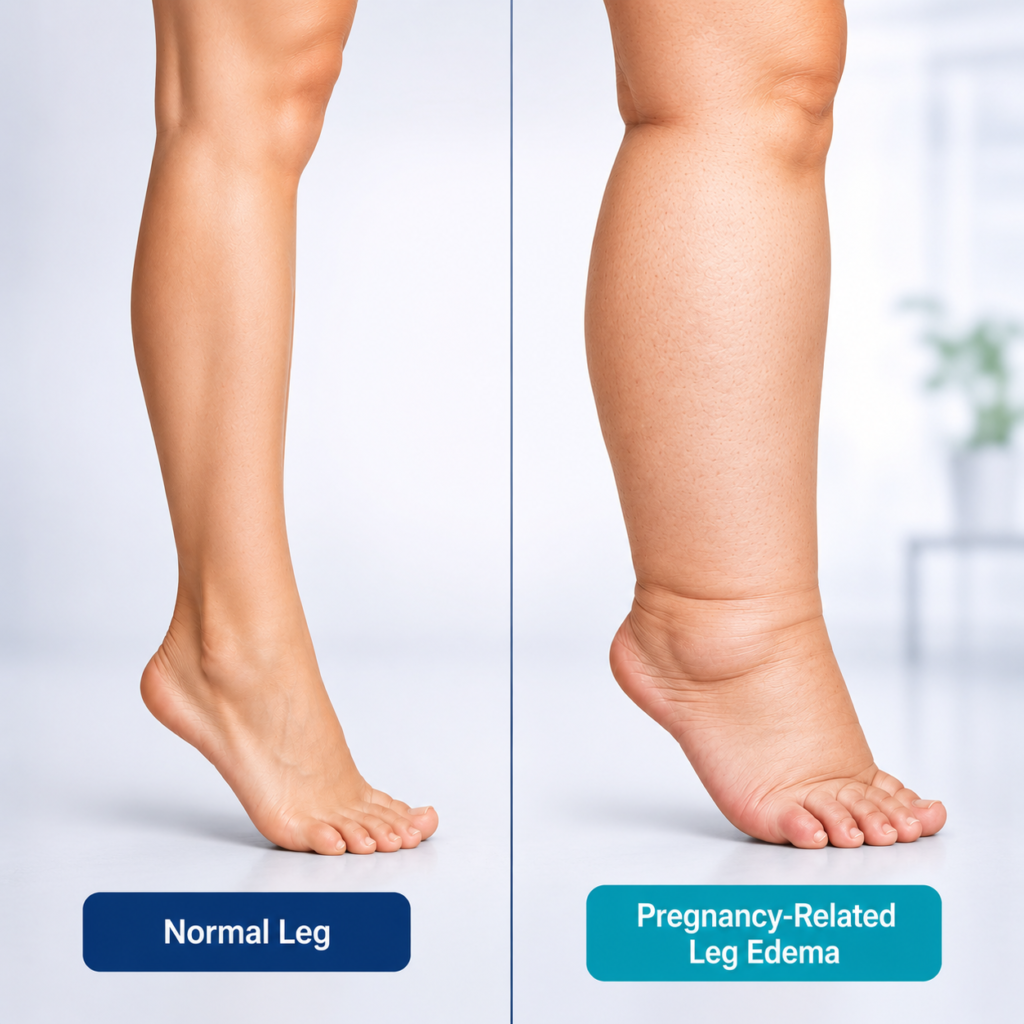
 Unlike most causes of leg swelling, pregnancy is unique because hormonal changes can contribute to fluid retention and swelling in the lower limbs.
Leg Swelling During Pregnancy
- Mild swelling in both legs and ankles is common during the third trimester
- Symptoms often worsen after standing for long periods or toward the end of the day
- Sudden swelling, one-sided swelling or associated headache may indicate preeclampsia or DVT
- Leg elevation, hydration, walking and compression stockings may help reduce discomfort
- Persistent or painful swelling during pregnancy requires medical evaluation
What Causes Leg Swelling?
Vascular Causes
- Chronic venous insufficiency (CVI): Weak vein valves cause blood pooling, heaviness and swelling
- Deep vein thrombosis (DVT): A blood clot in the leg can cause sudden, painful swelling, usually affecting one leg
- Varicose veins: Enlarged superficial veins contribute to venous pressure and ankle swelling in one or both legs
- Lymphedema: Lymphatic blockage leads to persistent swelling and skin thickening in one or both legs
- Peripheral artery disease (PAD): Dependent edema may develop when patients rest with their legs lowered to relieve pain
Other Causes
- Systemic diseases: Heart, kidney and liver diseases can disrupt normal fluid balance, causing excess fluid accumulation and swelling in both legs.
- Medications: Calcium channel blockers, steroids and hormonal medicines may trigger edema
- Lifestyle factors: Obesity, prolonged standing, inactivity and high salt intake worsen swelling
- Pregnancy: Hormonal and circulatory changes commonly cause bilateral leg swelling
Systemic Diseases
- Heart failure: Reduced pumping efficiency increases venous pressure, causing fluid to collect in the lower limbs.
- Kidney disease: Impaired kidney function leads to sodium and water retention, resulting in swelling of the legs and feet.
- Liver disease: Reduced protein production, high pressure in the portal vein and altered blood flow can cause fluid leakage into surrounding tissues.
- Thyroid disorders: Certain thyroid conditions may contribute to fluid retention and swelling in the lower extremities.
Treatment for Swollen Legs
Lifestyle Measures
- Leg elevation above heart level helps reduce venous pressure
- Walking and calf muscle activity improve blood circulation
- Reducing salt intake helps minimise fluid retention
- Avoid prolonged standing or sitting without movement
- Weight management improves venous and lymphatic function
Compression Therapy
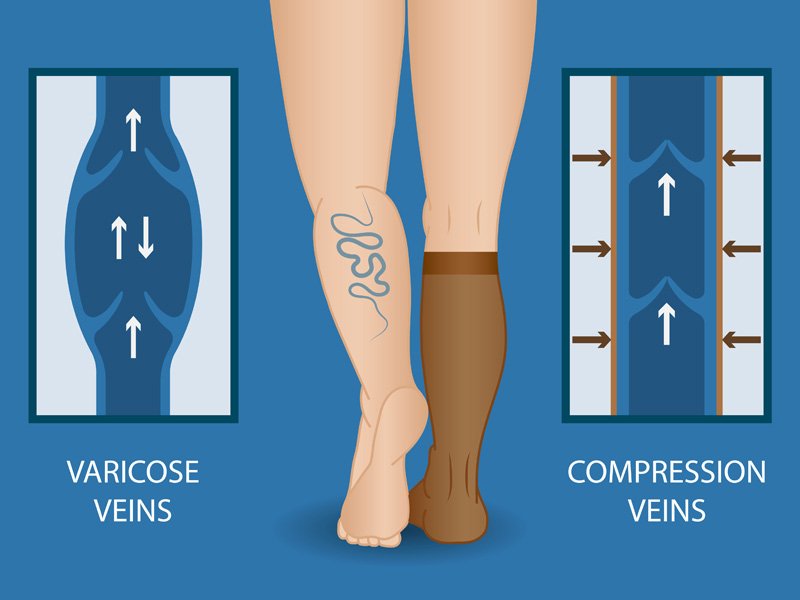
- Improve venous return and reduce swelling
- Commonly recommended for venous insufficiency and varicose veins
- Must be properly fitted to avoid discomfort or excessive pressur
Medical Treatment
- Diuretics help remove excess fluid in heart, kidney or liver-related edema
- Anticoagulants are used for DVT or blood clot treatment
- Antibiotics may be needed if infection or cellulitis is present
- Medication review may help identify drug-related swelling
Treating the Underlying Cause
- Venous insufficiency causing visible veins on legs may require vascular intervention or vein procedures
- Lymphedema may need specialised lymphatic drainage therapy
- Heart, kidney and liver disease require multidisciplinary management
- Pregnancy-related swelling is usually managed conservatively unless complications develop
When to See a Doctor for Swollen Legs?
- Skin changes with leg swelling, like discolouration, ulcers or warmth, may indicate venous disease or infection
- Older adults, pregnant women and patients with heart or kidney disease require timely assessment
- Sudden swelling in one leg with pain or redness may indicate DVT
- Swelling associated with chest pain or breathlessness may signal pulmonary embolism
- Progressive swelling lasting several days requires medical evaluation
What Are the Complications of Untreated Edema?
- Chronic edema may cause skin thickening, discolouration, and venous ulcers
- Reduced circulation increases the risk of delayed wound healing and infection
- Long-standing venous stasis raises the risk of blood clot formation
- Leg heaviness and discomfort can impair mobility and daily activity
- Untreated heart, kidney or liver disease-related edema may worsen systemic complications
- Severe lymphatic swelling may lead to recurrent cellulitis and permanent tissue changes
Take Home Message
FAQs
What Is the Best Treatment for Swollen Legs?
The best treatment depends on the underlying cause. Most cases can be managed with simple measures: elevating the legs above heart level, walking regularly, wearing compression stockings and reducing salt intake. These help improve venous return and reduce fluid buildup.
When swelling is linked to an underlying condition, targeted treatment is essential. Diuretics may be prescribed for heart, kidney or liver-related edema. Anticoagulants are used when DVT is the cause. Lymphedema requires specialised lymphatic drainage therapy.
Sudden swelling, one-sided swelling, or swelling with pain, redness, or breathlessness should not be self-managed and requires urgent medical evaluation
Why are my legs so swollen at night?
Leg swelling that worsens toward the end of the day is usually caused by fluid accumulating gradually under the influence of gravity during prolonged sitting or standing. By evening, this pooling becomes more noticeable.
The most common underlying cause is chronic venous insufficiency, in which weakened venous valves allow blood to pool in the lower legs rather than return efficiently to the heart. Heart and kidney conditions can also cause fluid retention that becomes more apparent at night.
Elevating the legs for 20–30 minutes before bed and wearing compression stockings during the day can help. Persistent or worsening nighttime swelling warrants medical evaluation to rule out a vascular or systemic cause.
When Should I Worry About Swollen Legs?
You should seek medical attention if swelling develops suddenly, affects one leg, becomes painful or is associated with redness, warmth or breathlessness. These symptoms may indicate deep vein thrombosis (DVT), infection or pulmonary embolism.
Persistent swelling that worsens over time or causes skin changes also requires evaluation, especially in older adults and patients with heart, kidney or vascular disease.
What Is the Difference Between Swelling in One Leg vs Both Legs?
Swelling in one leg is more commonly linked to localised problems such as DVT, injury or venous blockage. It may present with pain, redness or warmth.
Swelling in both legs is more often associated with systemic conditions such as heart failure, kidney disease or fluid retention. Clinical examination and imaging tests help determine the exact underlying cause of leg edema.
The best treatment depends on the underlying cause. Most cases can be managed with simple measures: elevating the legs above heart level, walking regularly, wearing compression stockings and reducing salt intake. These help improve venous return and reduce fluid buildup.
When swelling is linked to an underlying condition, targeted treatment is essential. Diuretics may be prescribed for heart, kidney or liver-related edema. Anticoagulants are used when DVT is the cause. Lymphedema requires specialised lymphatic drainage therapy.
Sudden swelling, one-sided swelling, or swelling with pain, redness, or breathlessness should not be self-managed and requires urgent medical evaluation.
Leg swelling that worsens toward the end of the day is usually caused by fluid accumulating gradually under the influence of gravity during prolonged sitting or standing. By evening, this pooling becomes more noticeable.
The most common underlying cause is chronic venous insufficiency, in which weakened venous valves allow blood to pool in the lower legs rather than return efficiently to the heart. Heart and kidney conditions can also cause fluid retention that becomes more apparent at night.
Elevating the legs for 20–30 minutes before bed and wearing compression stockings during the day can help. Persistent or worsening nighttime swelling warrants medical evaluation to rule out a vascular or systemic cause.
You should seek medical attention if swelling develops suddenly, affects one leg, becomes painful or is associated with redness, warmth or breathlessness. These symptoms may indicate deep vein thrombosis (DVT), infection or pulmonary embolism.
Persistent swelling that worsens over time or causes skin changes also requires evaluation, especially in older adults and patients with heart, kidney or vascular disease.
Swelling in one leg is more commonly linked to localised problems such as DVT, injury or venous blockage. It may present with pain, redness or warmth.
Swelling in both legs is more often associated with systemic conditions such as heart failure, kidney disease or fluid retention. Clinical examination and imaging tests help determine the exact underlying cause of leg edema.