Table of Contents
-
1. Snapshot
-
2. Synopsis
-
3. What Are Varicose Veins During Pregnancy?
-
4. Why Do Varicose Veins Worsen During Pregnancy?
-
5. Symptoms of Varicose Veins During Pregnancy
-
6. Treatment Options For Vericose Veins During Pregnancy
-
7. Risks of Varicose Veins in Pregnancy
-
8. How to Prevent Varicose Veins During Pregnancy?
-
9. Take Home Message
-
10. FAQs
Quick Answers
- What Are Varicose Veins in Pregnancy: Enlarged, twisted veins caused by increased pressure on leg veins during pregnancy.
- Causes of Varicose Veins in Pregnancy: Hormonal changes, increased blood volume, and the growing uterus slow blood flow in the legs.
- Common Symptoms: Visible veins, leg heaviness, aching, swelling and night cramps.
- Who Is at Risk: Women with a family history, multiple pregnancies, obesity or prolonged standing.
- Safe Treatment: Compression stockings, walking, leg elevation and left-side sleeping.
- When to Worry: Sudden swelling, severe pain, redness or breathlessness requires prompt medical evaluation.
- After Delivery: Many pregnancy-related varicose veins improve within 3-6 months postpartum. Up to 25% women may have persistent visible veins beyond 6 months.
Overview
Varicose veins in pregnancy develop due to hormonal changes, increased blood volume and pressure from the growing uterus on pelvic and leg veins. While they commonly cause leg heaviness, swelling and visible vein enlargement, most cases can be managed safely with conservative measures such as compression therapy, exercise and leg elevation.
Although pregnancy-related varicose veins often improve after delivery, some women may experience persistent symptoms or develop complications such as superficial thrombophlebitis or worsening venous insufficiency.
Early symptom management and appropriate monitoring help improve comfort throughout pregnancy and have good long-term vein health.
What Are Varicose Veins in Pregnancy?
Varicose veins are enlarged, twisted superficial veins that develop when vein valves become less effective and blood pools within the veins. Pregnancy is one of the most common periods during which women develop varicose veins.
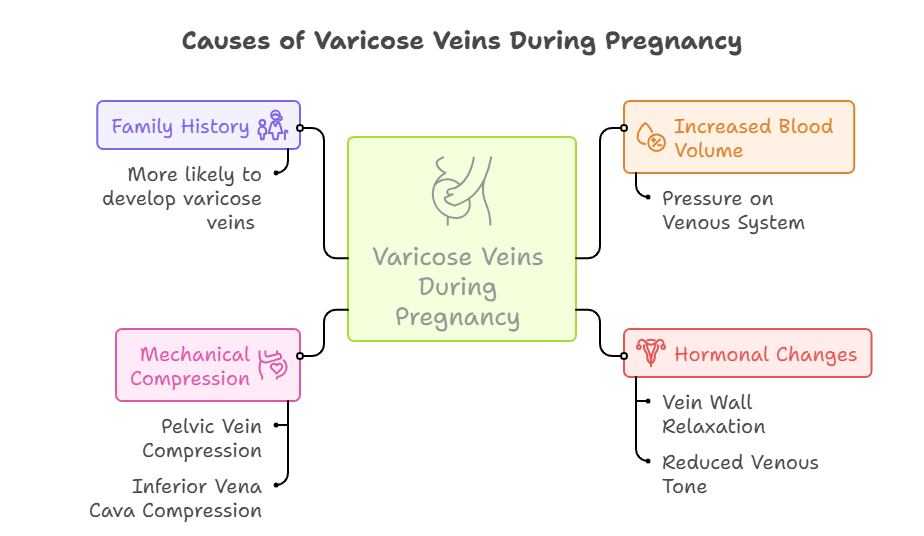
Several physiological changes cause varicose veins in feet during pregnancy:
- Increased blood volume: Blood volume rises significantly during pregnancy, placing additional pressure on the venous system.
- Hormonal changes: Progesterone relaxes vein walls and reduces venous tone, making veins more prone to dilation.
- Mechanical compression: The growing uterus compresses pelvic veins and the inferior vena cava, slowing blood return from the legs.
- Common locations: Varicose veins frequently appear in the legs, thighs, behind the knees and vulvar region.
- Family history: Women with a family history of varicose veins are more likely to develop them during pregnancy.
What Causes Varicose Veins in Pregnancy?
Many women notice that varicose veins become more prominent as pregnancy progresses, particularly during the second and third trimesters.
The main reason is the combined effect of hormonal and mechanical changes.
Hormonal Mechanisms
- Progesterone relaxes vein walls and reduces venous tone, making blood more likely to pool in the lower limbs.
- Relaxin, a hormone secreted during pregnancy, promotes blood vessel relaxation and increases vascular permeability, which can contribute to swelling.
- The growing uterus exerts increasing pressure on the pelvic veins and the inferior vena cava, slowing the return of blood from the legs.
Mechanical Changes
- Multiple pregnancies may increase long-term stress on vein valves, raising the risk of varicose veins in subsequent pregnancies or persistent varicose veins after delivery.
- Venous pressure rises significantly during the third trimester as the uterus continues to grow.
- Excessive pregnancy weight gain can place additional strain on the veins and worsen symptoms.
Additional factors that worsen pregnancy circulation problems include:
- Prolonged standing or sitting
- Pre-existing venous insufficiency
Symptoms of Varicose Veins in Pregnancy
Varicose veins pregnancy symptoms can vary from mild cosmetic concerns to significant discomfort.
- Visible blue, purple or bulging veins beneath the skin
- Aching or throbbing pain in the legs
- Leg heaviness that worsens throughout the day
- Burning, itching or tenderness around affected veins
- Swollen ankles and feet, particularly in the evening
- Night-time leg cramps
- Restless legs during sleep
- Vulvar varicosities causing pelvic pressure or discomfort when standing or walking
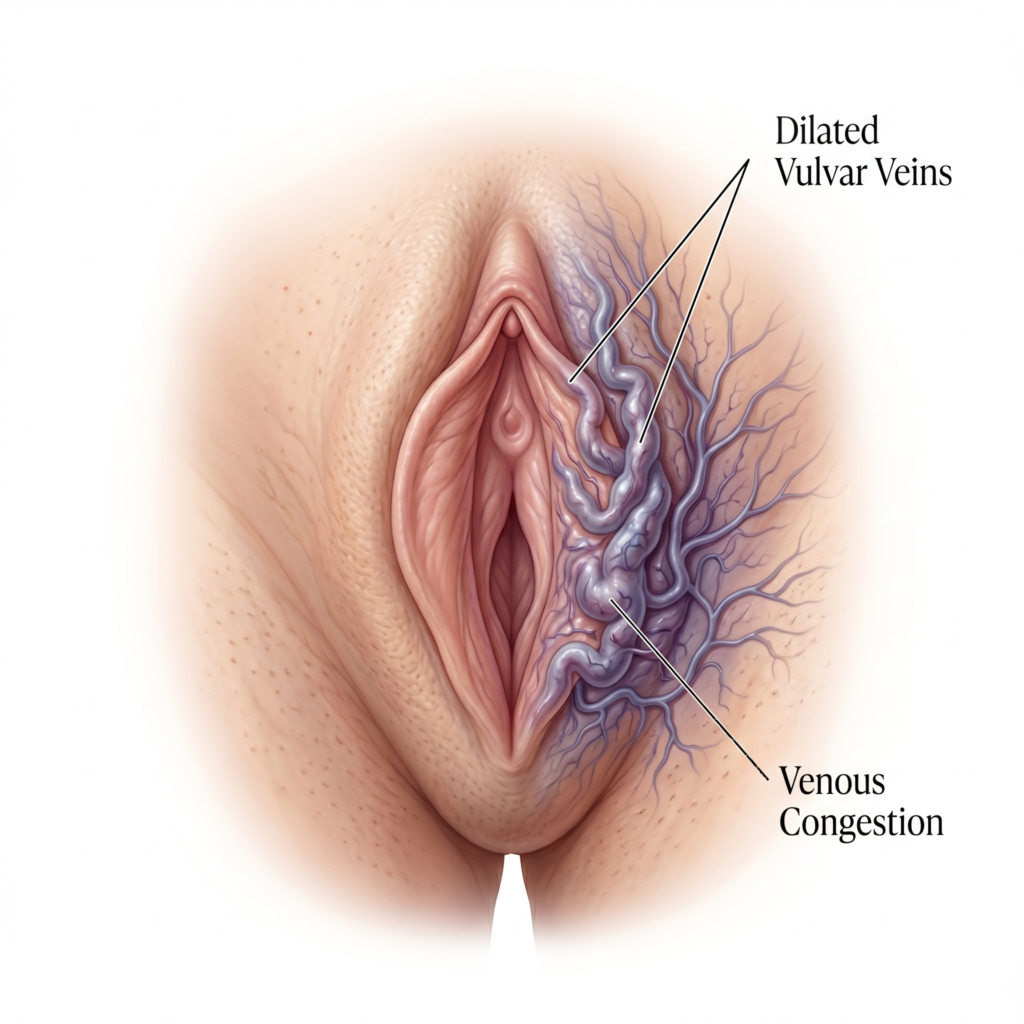
What are Vulvar Varicosities?
Vulvar varicosities are enlarged veins that develop around the vulva during pregnancy due to increased blood volume and pressure on the pelvic veins.
In simple words, vulvar varicosities are varicose vein in the groin area.
- Affects approximately 18-22% of pregnant women, most commonly in the second and third trimesters
- May cause heaviness, pressure, discomfort or visible bluish veins around the vulvar region
- Symptoms often worsen after prolonged standing and improve with rest or left-side sleeping
- Most cases improve significantly within 3-6 weeks after delivery and rarely affect vaginal childbirth
Risks of Varicose Veins in Pregnancy?
Pregnancy increases pressure on the veins of the pelvis and legs while hormonal changes relax the vein walls. As a result, existing varicose veins may worsen, and new varicose veins can develop.
Worsening venous disease during pregnancy can lead to symptoms and complications in some women, including:
- Progressive leg heaviness, aching and discomfort
- Worsening chronic venous insufficiency (CVI)
- Haemorrhoids may develop alongside varicose veins due to increased pelvic pressure, hormonal changes and impaired venous return
- Superficial thrombophlebitis due to clot formation within affected veins
- Increased risk of venous thromboembolism (VTE) in susceptible individuals
- Persistent varicose veins after delivery
Pregnancy increases the risk of DVT by at least 5 times. Women with additional risk factors may be at greater risk of venous thromboembolism (VTE) events.
Factors that may increase the risk or severity of varicose veins and DVT during pregnancy include:
- Carrying multiples: twins or triplets
- Obesity
- Family history of venous disease
- Prolonged standing occupations
Although serious complications remain uncommon, pain, redness or sudden swelling should be assessed by a vascular specialist.
Treatment Options for Varicose Veins in Pregnancy
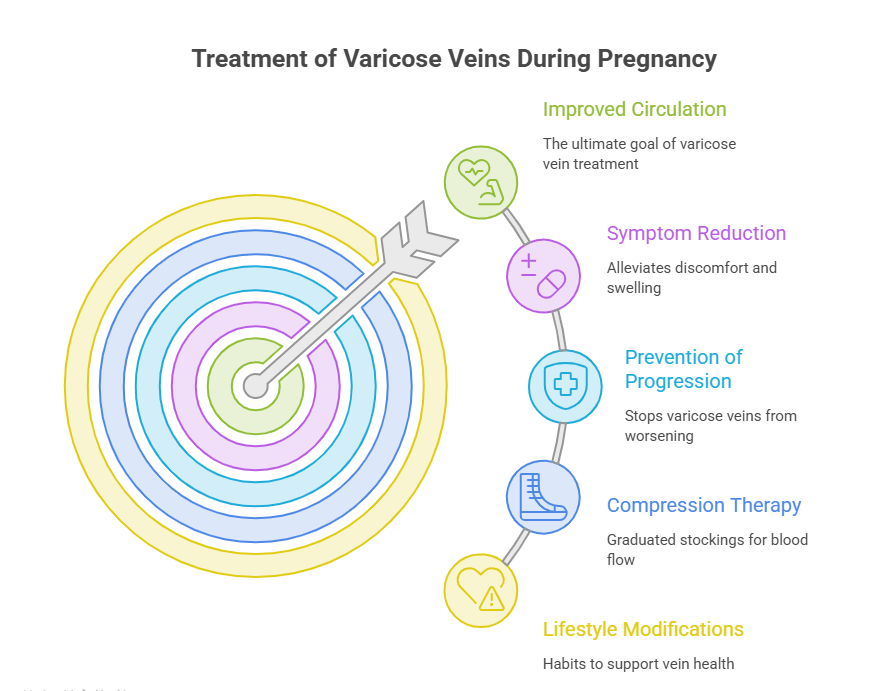
Treatment for varicose veins in pregnancy focuses on improving circulation, reducing symptoms and preventing progression.
Compression Therapy
- Graduated compression stockings improve blood flow towards the heart.
- Reduce swelling and leg discomfort.
- Often considered the first-line treatment during pregnancy.
Physical Activity
- Regular walking activates the calf muscle pump.
- Improves venous return.
- Helps reduce blood pooling in the legs.
Avoid prolonged standing or sitting.
- Avoid crossing your legs for long periods.
- Avoid tight clothing around the waist, groin, or thighs: it can increase pressure on the veins.
- Maintain a healthy pregnancy weight gain.
- Mild: Less than 18.5 kg weight gain during pregnancy.
- Moderate (Recommended): Approximately 18.5-24.9 kg weight gain.
- Severe/Excessive: More than 25 kg weight gain, with risks increasing further above 30 kg.
Leg Elevation
- Elevating the legs above heart level decreases venous pressure.
- Helps reduce swelling and heaviness.
Sleep Positioning
- Sleeping on the left side reduces pressure on the inferior vena cava.
- Supports better circulation in the lower limbs.
Lifestyle Modifications
- Avoid prolonged standing or sitting.
- Avoid crossing your legs for long periods.
- Avoid tight clothing around the waist, groin, or thighs: it can increase pressure on the veins.
- Maintain a healthy pregnancy weight gain.
- Mild: Less than 18.5 kg weight gain during pregnancy.
- Moderate (Recommended): Approximately 18.5-24.9 kg weight gain.
- Severe/Excessive: More than 25 kg weight gain, with risks increasing further above 30 kg.
Procedures such as sclerotherapy, endovenous laser treatment and surgery are generally deferred until after delivery.
How to Prevent Varicose Veins During Pregnancy?
Several measures can help reduce symptom severity and slow progression.
- Maintain regular walking based on your stage of pregnancy to support healthy blood flow.
- First trimester: 7,000-10,000 steps/day
- Second trimester: 8,000-10,000 steps/day
- Third trimester: 5,000-7,000 steps/day with supportive footwear and a comfortable pace.
- Perform gentle calf and ankle exercises.
- Avoid standing or sitting continuously for long periods.
- Elevate your legs regularly to improve blood flow and reduce swelling.
- Raise your legs above heart level while resting.
- Elevate for 15-20 minutes per session.
- Repeat 3-4 times daily, especially after prolonged standing or sitting.
- Sleep on the left lateral side.
- Wear compression stockings if advised by your doctor.
- Drink approximately 2-3 litres (8-12 cups) of water daily to support healthy circulation and reduce blood thickening.
These simple remedies for varicose veins in pregnancy can be done at home, and they significantly improve circulation and reduce venous pressure.
Take Home Message
Varicose veins during pregnancy develop due to hormonal changes, increased blood volume, and pressure from the growing uterus on the venous system. Symptoms commonly include visible enlarged veins, leg heaviness, swelling, and discomfort, which often become more noticeable during the third trimester.
Most pregnancy-related varicose veins can be managed safely through compression therapy, regular movement, leg elevation and lifestyle modifications. Although many improve after delivery, persistent symptoms, sudden swelling or signs of clot formation should not be ignored. Early assessment and appropriate management help maintain comfort during pregnancy and support long-term vein health.
FAQs
Can varicose veins be treated during pregnancy?
Yes, conservative management is the preferred approach during pregnancy. Compression stockings, walking, leg elevation and avoiding prolonged standing can help improve circulation and reduce symptoms.
Procedures such as sclerotherapy, glue ablation or laser treatment are usually postponed until after delivery because many pregnancy-related varicose veins improve naturally within a few months postpartum.
Can you give birth with varicose veins?
Yes, women with varicose veins can safely have a normal vaginal delivery. Varicose veins alone are not an indication for a caesarean section.
Even vulvar varicose veins, although sometimes uncomfortable, rarely interfere with childbirth. In severe cases, additional obstetric or vascular assessment may be recommended.
Rare complications, such as superficial thrombophlebitis or DVT/venous thromboembolism, may influence management decisions, but delivery planning is primarily based on overall maternal and fetal health rather than on varicose veins alon
When should I worry about varicose veins during pregnancy?
Varicose veins are extremely common in pregnancy and in most cases, they are only cosmetically concerning. However, there are specific warning signs that warrant prompt medical attention.
See a vascular specialist immediately if you notice:
- Sudden swelling, redness, or warmth in one leg, particularly if it affects only one leg. This could indicate a DVT, a blood clot in the deeper veins, which carries serious risks during pregnancy.
- Chest pain or sudden breathlessness needs emergency care. These can be signs of a pulmonary embolism, a potentially fatal complication if a blood clot travels to the lungs.
- A hard, cord-like, tender vein near the surface, this suggests superficial thrombophlebitis, inflammation with clotting in a surface vein.
- Bleeding from a varicose vein as the thin, stretched skin over surface veins can rupture, especially with vigorous itching or minor trauma.
- Skin changes around the vein like thickening, darkening, or eczema-like rash over a varicose vein signals chronic venous insufficiency that needs evaluation.
Do varicose veins disappear after delivery?
In most cases yes but the timeline varies. Pregnaamcy-related varicose veins improve significantly within 3 to 4 months postpartum as hormone levels normalise, blood volume reduces, and pressure on the pelvic veins is relieved.
However, complete resolution is less likely if you:
- Had varicose veins before your first pregnancy
- Have had two or more pregnancies
- Have a family history of varicose veins or venous disease
- Spent long hours on your feet during pregnancy
In breastfeeding mothers, elevated progesterone levels persist, which can slow vein recovery. Hence, it is recommended to wait for 3 to 6 months after stopping breastfeeding before assessing whether treatment is needed — this gives the veins adequate time to respond to hormonal normalisation.
If veins remain prominent, symptomatic, or cosmetically bothersome beyond this window, treatment options like laser ablation, sclerotherapy, or radiofrequency ablation can be safely performed.