Snapshot
- Mesenteric ischemia (MeI): Occurs when reduced blood flow limits oxygen delivery to the intestine and surrounding organs, causing tissue injury and bowel necrosis.
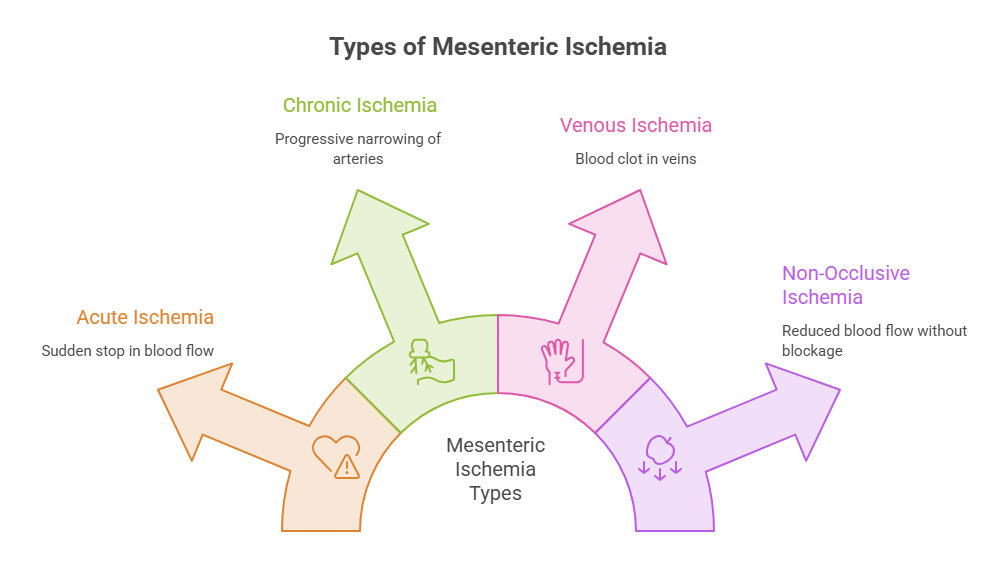
- Types: Acute, chronic, venous or non-occlusive, depending on how intestinal blood flow is compromised.
- Acute Emergency: Acute mesenteric ischemia (AMeI) rapidly progresses to irreversible bowel damage and requires urgent evaluation and treatment.
- Key Symptoms: Sudden severe abdominal pain is typical of acute disease, while chronic disease often causes pain after eating, food avoidance and weight loss.
- Treatment: Restoring blood flow requires procedures such as embolectomy, thrombectomy, angioplasty, stenting, bypass or hybrid revascularisation, with bowel resection when tissue is no longer viable
Synopsis
Mesenteric or bowel ischemia develops when the intestine does not receive adequate blood flow and oxygen. It can result from a sudden arterial blockage, progressive narrowing of the mesenteric arteries, a blood clot in the veins around the intestine or severely reduced blood flow throughout the body.
Acute mesenteric ischemia (AMeI) is particularly time-sensitive because prolonged ischemia can quickly progress to dying bowel tissue, sepsis and shock.
Chronic mesenteric ischemia (CMeI) usually develops gradually and causes symptoms like characteristic pain after eating, often leading to food avoidance and weight loss.
Early vascular imaging and revascularisation help preserve healthy bowel tissue and prevent life-threatening complications.
What Is Mesenteric or Bowel Ischemia?
Mesenteric ischemia refers to inadequate blood flow through the vessels supplying the intestine. This compromises oxygen and nutrient supply to intestinal tissues.
When oxygen supply fails to meet demand, cell injury occurs, and bowel ischemia develops. If low oxygen is prolonged, the resulting tissue injury can become irreversible.
How Does Blood Reach the Intestine?
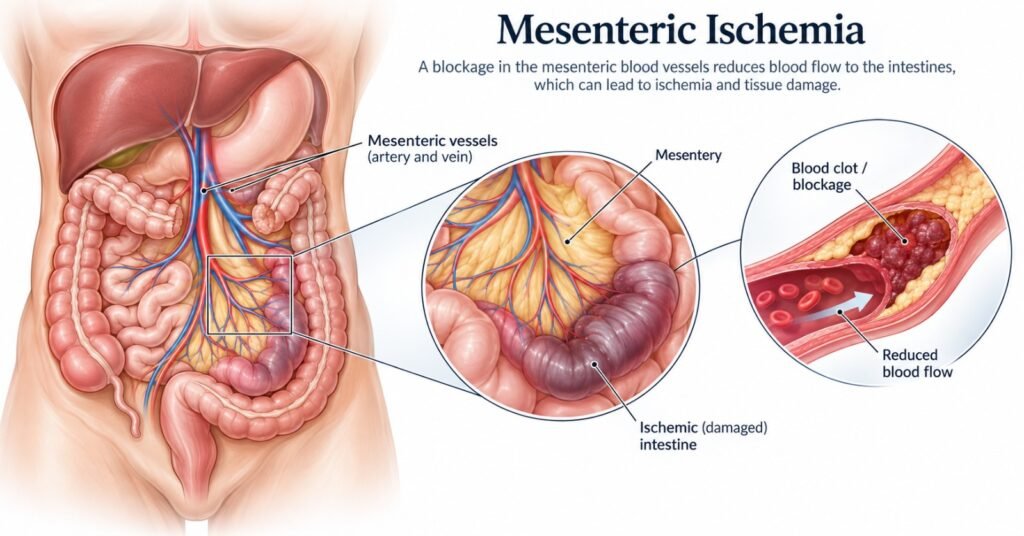
The intestinal blood supply comes from interconnected vessels in the stomach region, also called the splanchnic circulation:
- Celiac artery: Supplies the stomach and other upper abdominal organs and contributes to the proximal gastrointestinal circulation.
- Inferior mesenteric artery: Supplies much of the distal colon and contributes to rectal circulation.
- Superior mesenteric artery: Supplies most of the small intestine and parts of the colon.
- Mesenteric veins: Drain blood from the intestine into the portal venous system.
- Collateral circulation: Connections between mesenteric arteries can provide alternative blood circulation when one vessel becomes narrowed or blocked. These pathways can become insufficient when disease is extensive or an important vessel is abruptly occluded.
What Happens When Intestinal Blood Flow Falls?
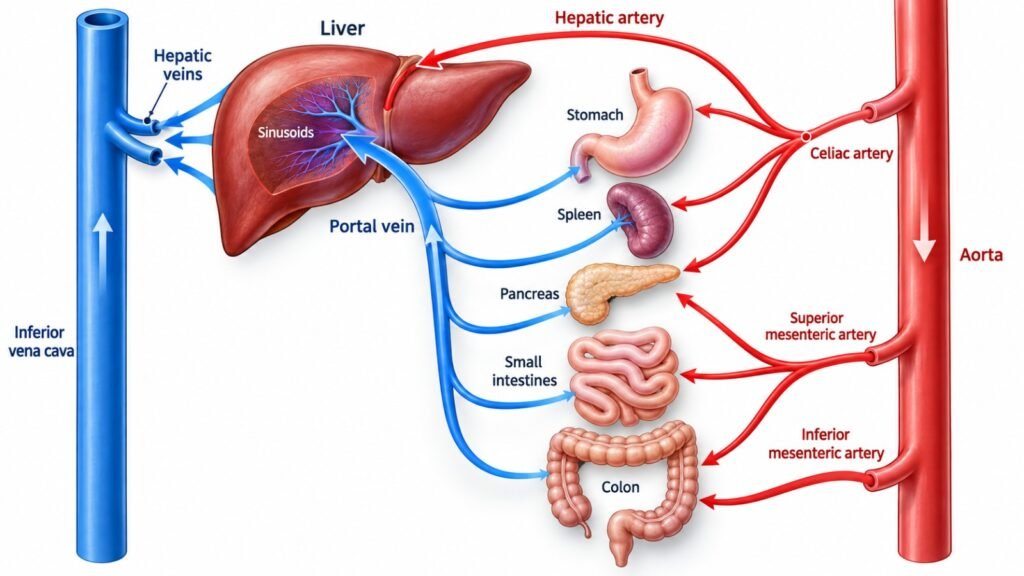
Reduced blood flow first deprives intestinal cells of oxygen, causing tissue damage. If this continues, the damage can spread through the full thickness of the bowel wall, eventually causing bowel tissue death or necrosis and, in severe cases, a perforation or hole in the bowel.
Damage to the bowel’s protective lining allows bacteria and harmful substances from the intestine to enter the bloodstream, triggering widespread inflammation and potentially causing a severe systemic reaction to infection called sepsis.
When blood flow returns after prolonged ischemia, the sudden return of oxygen can cause additional inflammation and tissue damage. This is known as reperfusion injury.
What Are the Types of Mesenteric Ischemia?
Acute Mesenteric Ischemia
Acute mesenteric ischemia develops when intestinal blood flow stops suddenly, most commonly because of a blood clot in an artery. Clot in the veins around the intestine can also cause acute ischemia.
In some patients, blood flow falls severely because of conditions such as shock, severe infection or serious heart problems, even though there is no major blockage in the intestinal arteries.
Chronic Mesenteric Ischemia
Chronic mesenteric ischemia usually results from progressive narrowing of the mesenteric arteries due to fatty plaque buildup or atherosclerosis.
After meals, the intestines require more blood flow for digestion. When narrowed vessels cannot provide sufficient blood flow, abdominal pain develops.
Signs include:
- Pain after meals
- Food avoidance or food fear
- Progressive unintentional weight loss
- Malnutrition in advanced disease
Chronic disease can also become acute when a blood clot forms within a severely narrowed artery (thrombosis). The Society for Vascular Surgery identifies plaque-related blockage at the origins of the main arteries supplying the intestine as the usual cause of chronic mesenteric ischemia.
Mesenteric Venous Ischemia
A blood clot in the veins that drain the intestine obstructs blood returning from the intestine.
This causes blood to build up in the intestinal veins and the bowel wall to swell, increasing tissue pressure and reducing blood flow through the smallest blood vessels.
Conditions that increase the likelihood of blood clots, such as cancer, inflammatory conditions of the abdomen or other clotting disorders, also contribute to mesenteric venous ischemia.
Severe venous ischemia quickly progresses to intestinal tissue death (bowel infarction).
Non-Occlusive Mesenteric Ischemia
Non-occlusive MeI occurs when there is no major blockage in the intestinal arteries, but blood flow to the intestine becomes severely reduced.
Severe low blood flow throughout the body can cause the intestinal arteries to narrow sharply, reducing blood flow to the bowel.
It is particularly associated with:
- Shock
- Low cardiac output, meaning the heart is not pumping enough blood
- Advanced stage heart failure
- Critical illness
- Severe loss of body fluids or blood (hypovolaemia)
- Certain medicines that narrow blood vessels and affect blood flow
Treatment therefore focuses on correcting the underlying circulatory problem rather than simply removing an arterial clot.
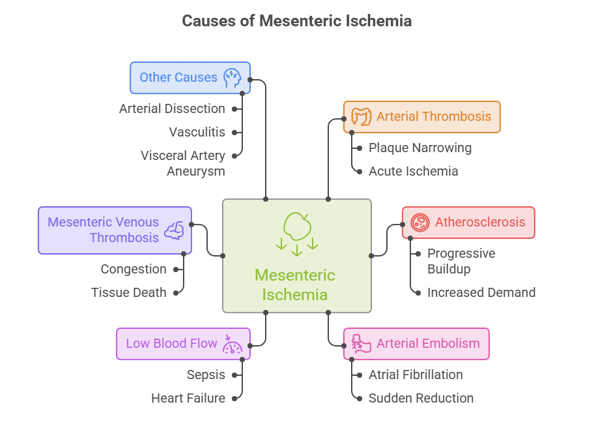
Mesenteric Ischemia: Causes
In Western countries, acute mesenteric ischaemia is more commonly caused by arterial occlusion, while mesenteric venous thrombosis accounts for around 10% of cases. However, in the Indian population, venous (48%) and arterial (52%) occlusions occur in nearly equal proportions.
- Arterial thrombosis: A clot can form inside a diseased mesenteric artery, usually where plaque has already narrowed the artery, causing acute or acute-on-chronic ischemia.
- Atherosclerosis and mesenteric artery stenosis: Progressive plaque buildup narrows the mesenteric arteries and can limit blood flow when intestinal demand increases after meals.
- Arterial embolism: A blood clot that forms in the heart, often due to atrial fibrillation (an irregular heartbeat), can travel to and block a mesenteric artery, suddenly reducing blood flow to the intestine.
- Low blood flow and shock: Severe low blood pressure, sepsis, heart-related shock, severe heart failure, major blood loss or severe fluid loss can reduce blood flow to the intestine without a major arterial blockage.
- Mesenteric venous thrombosis: A clot obstructs venous drainage, causing congestion and the bowel wall to swell, which can progress to intestinal tissue death.
- Other vascular and mechanical causes: A tear within a mesenteric artery wall (arterial dissection), inflammation of blood vessels (vasculitis), bulging or weakening of an abdominal artery (visceral artery aneurysm) or conditions that trap or twist the bowel, such as a strangulated obstruction, volvulus or internal hernia, can also compromise intestinal blood flow.
Risk Factors of Mesenteric Ischemia
- Atrial fibrillation and heart failure: Increased risk of clots or reduced blood flow to the intestine.
- Atherosclerosis: Plaque buildup in arteries raises the risk of chronic mesenteric ischemia.
- Diabetes, high blood pressure and high cholesterol: Promote artery damage and narrowing.
- Smoking: Accelerates atherosclerosis and increases vascular risk.
- Older age: Risk increases as artery and heart disease become more common.
- Recent vascular or major surgery: Can increase the risk of acute blood-flow problems.
- Severe illness, shock or dehydration: Can sharply reduce blood flow to the intestine.
Mesenteric Ischemia Treatment
Diagnosis involves imaging such as CT angiography or traditional angiography to visualise blood flow and locate blockages.
According to the World Journal of Gastroenterology, MeI treatment focuses on restoring intestinal blood flow, treating the underlying vascular cause and determining whether any portion of the bowel has become irreversibly damaged.
Options include:
- Emergency stabilisation: IV fluids, blood pressure support, correction of metabolic abnormalities, antibiotics and anticoagulants when indicated.
- Endovascular treatment: Catheter-based clot removal, balloon angioplasty, stent placement or other techniques to restore blood flow without immediate open surgery.
- Open vascular surgery: Embolectomy, thrombectomy, bypass or surgical repair of the affected artery when endovascular treatment is unsuitable or unsuccessful.
- Bowel resection: Removal of dead bowel tissue while preserving as much healthy intestine as possible.
- Hybrid treatment: Combines open surgery with catheter-based treatment when both vascular repair and direct assessment of the bowel are required.
The treatment approach depends on the cause and location of the blockage, extent of bowel injury, overall condition and whether the bowel remains viable.
What Happens If Mesenteric Ischaemia Goes Untreated?
Untreated mesenteric ischemia can progress from inadequate intestinal blood flow and tissue injury to irreversible bowel necrosis. Once the bowel wall is severely damaged, its protective barrier can break down, allowing bacteria and toxins to enter the bloodstream. This can lead to peritonitis, sepsis, intestinal perforation, multi-organ dysfunction and shock.
The risk of death is particularly high when diagnosis and treatment are delayed. An Indian tertiary-care study of 117 patients with acute mesenteric ischemia reported an overall mortality of 39%, with mortality rates reaching 51% among patients with arterial occlusion.
Acute mesenteric ischemia therefore requires urgent diagnosis and restoration of intestinal blood flow, with treatment aimed at preventing irreversible bowel damage and preserving viable intestine.
Take Home Message
Mesenteric ischemia is a vascular condition that can threaten intestinal health and survival when blood flow is significantly reduced.
Acute disease requires urgent assessment because prolonged ischemia can progress to permanent bowel damage and tissue death, while chronic disease can cause persistent pain after meals, food avoidance and malnutrition.
CT angiography, a specialised scan of the blood vessels, helps identify the vascular cause and assess bowel injury. Depending on the findings, restoring blood flow can involve endovascular treatment, open surgery or a hybrid approach, with bowel resection required when tissue has become irreversibly damaged
FAQs
What Is Mesenteric Ischemia?
Mesenteric ischemia is a serious condition in which blocked or reduced blood flow to the intestines deprives bowel tissue of oxygen & nutrients. It can affect the small intestine or, more broadly, the bowel and may result from a blocked or narrowed artery, a blood clot or severely reduced blood flow.
There are two types: acute mesenteric ischemia, which develops suddenly and is a medical emergency, while chronic mesenteric ischemia develops gradually, most often due to atherosclerosis. Without timely treatment, severe ischemia can cause irreversible bowel damage, tissue death, sepsis and potentially death.
What Foods Should I Avoid If I Have Mesenteric Ischemia?
No specific food can reopen a narrowed or blocked mesenteric artery, so dietary changes cannot replace vascular treatment. People with chronic mesenteric ischemia should avoid unnecessarily restricting food because post-meal pain can already cause food avoidance, weight loss and malnutrition.
A clinician or dietitian can recommend an individualised diet based on nutritional status, cardiovascular risk factors and the underlying cause.
What Is the Difference Between Bowel Ischemia and Mesenteric Ischemia?
Mesenteric ischemia primarily describes inadequate blood flow through the arteries or veins supplying the intestine, while bowel ischemia refers to the resulting lack of oxygen and injury to intestinal tissue.
Mesenteric ischemia is therefore a vascular cause of bowel ischemia, but bowel ischemia can also occur from volvulus, strangulated hernia or other mechanical obstruction. Both can progress to bowel necrosis if blood flow is not restored promptly.