Quick Answer
- Underlying mechanism: PAD develops when fatty plaque builds up inside the arterial walls, causing them to narrow & is known as atherosclerosis.
- Primary cause: The disease most often begins in the arteries of the legs, where plaque accumulation limits oxygen delivery to muscles during activity.
- Major risk factors: Smoking, diabetes, high blood pressure and high cholesterol are the leading contributors.
- Contributing influences: Ageing, family history of vascular disease, chronic kidney disease and a sedentary lifestyle further increase vulnerability to PAD.
Synopsis
You must have heard of someone experiencing a heart attack and undergoing angioplasty to clear the blocked artery. Similarly, Peripheral Artery Disease (PAD) affects the arteries in your legs/arms instead of the heart.
Peripheral Artery Disease (PAD) occurs when plaque buildup causes narrowing of arteries, reducing blood flow to the legs or arms.
The top 5 risk factors include smoking, diabetes, hypertension, high cholesterol and age above 50yrs. PAD also signals broader susceptibility to vascular disease, raising the risk of heart attack and stroke.
What is Peripheral Artery Disease?
Peripheral Artery Disease (PAD) refers to the partial or complete blockage of peripheral arteries, most often in the legs or arms, due to plaque buildup.
This plaque, also called atherosclerosis, is composed of cholesterol, fat, calcium and fibrous tissue. It narrows the arterial lumen and limits the supply of oxygen and nutrients to the muscles.
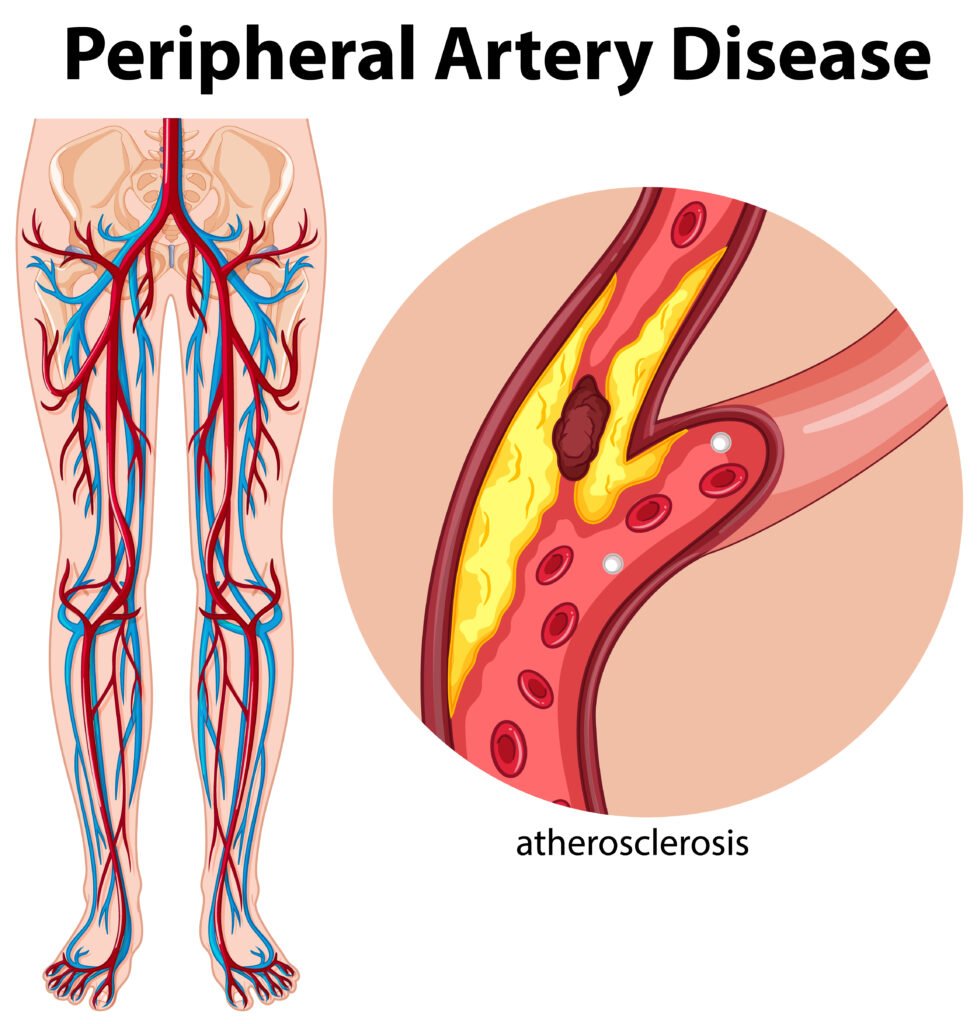
Peripheral Artery Disease (PAD) affects multiple blood vessels throughout the body. And that’s why people with PAD often also have arterial narrowing or blockages elsewhere.
For example:
- Affecting the heart – Coronary artery disease
- Affecting the brain – Cerebrovascular disease
- Affecting arteries in the neck – Carotid artery disease
- Affecting groin area – Erectile dysfunction & male infertility
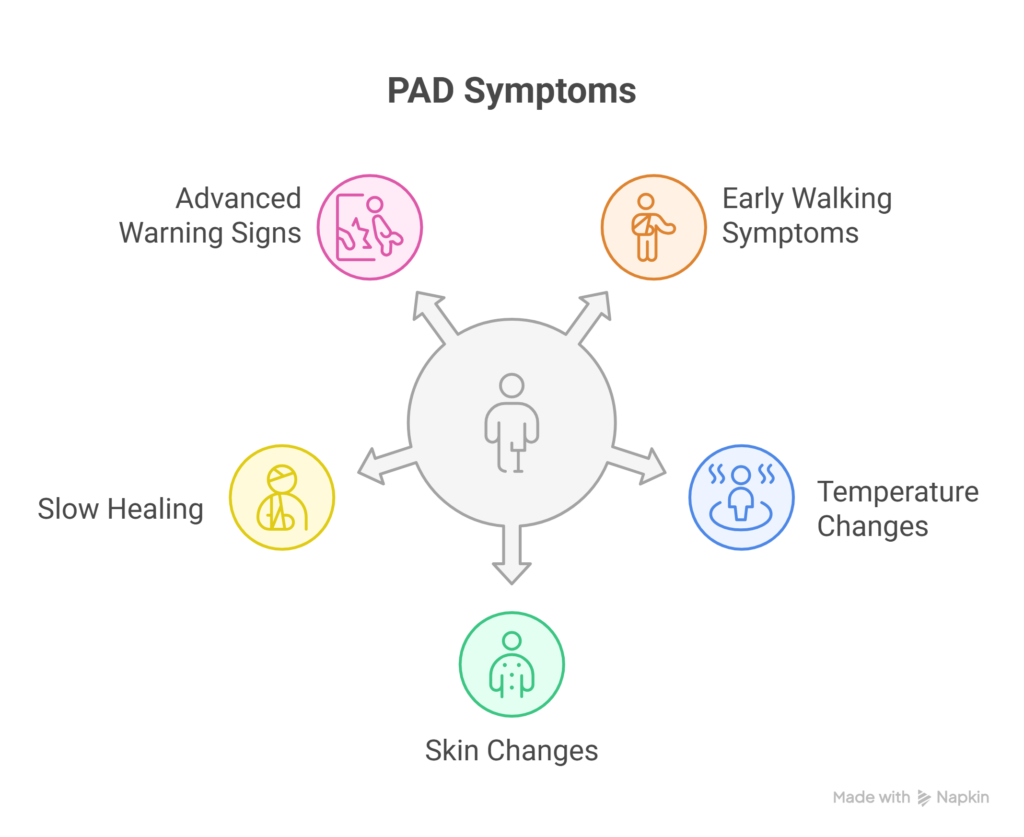
Symptoms of Peripheral Artery Disease
- No symptoms: The body can still compensate.
- Intermittent Claudication: Pain or cramping develops in the legs (or arms) after walking a short distance.
- Rest Pain: Persistent foot pain even when at rest
- Skin and Tissue Changes: Pale, cool limbs, brittle nails, hair loss on legs
- Weak or Absent Pulses: Diminished pulses
Causes of Peripheral Artery Disease
Atherosclerosis
- Plaque buildup in the arteries narrows vessels and restricts blood flow.
- Plaque is composed of fat, calcium, blood cells and fibrous tissue.
- When plaque ruptures, it can cause clots that may obstruct circulation completely.
Other (Less Common) Causes
- Vasculitis: Arterial inflammation causing narrowing or scarring.
- Embolism: A blood clot travelling from another site blocks an artery.
- Trauma or Radiation Injury: Damage to arterial walls from direct impact or radiation therapy.
- Fibromuscular Dysplasia: Abnormal cell growth within artery walls leading to narrowing or blockage.
Metabolic and Inflammatory Contributors
- Long-term inflammation in the body
- Abnormal cholesterol levels
- High levels of homocysteine (an amino acid) in the blood
- Blood disorders that increase the tendency for clot formation
Risk Factors of Peripheral Artery Disease
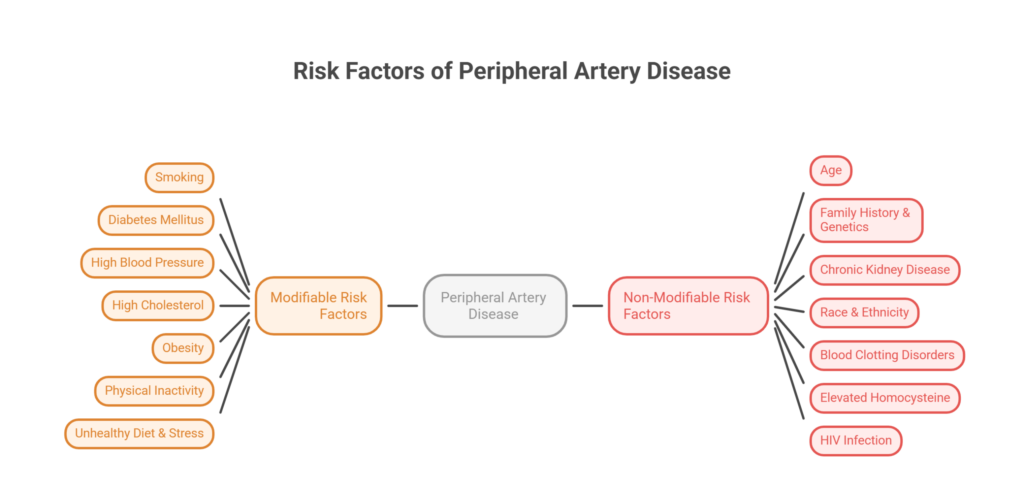
Modifiable Risk Factors
- Smoking: The single most significant risk factor. Nicotine damages blood vessel walls, raises blood pressure and constricts arteries. Even secondhand smoke increases risk.
- Diabetes Mellitus: Chronic high blood sugar injures arterial linings, accelerates plaque formation and impairs circulation. Poorly controlled diabetes increases the likelihood of critical limb ischaemia and amputation.
- High Blood Pressure (Hypertension): Persistent high pressure weakens arteries and fosters plaque deposition.
- High Cholesterol: Elevated LDL (“bad” cholesterol) and triglycerides (a type of fat stored in the blood) promote atherosclerotic buildup.
- Obesity: Excess body weight contributes to hypertension, diabetes and dyslipidaemia, all precursors of PAD.
- Physical Inactivity: A sedentary lifestyle reduces muscle oxygen demand, weakens collateral circulation and increases the risk of vascular stiffening.
- Unhealthy Diet & Stress: Diets rich in saturated fats and chronic stress contribute to vascular inflammation and elevated cholesterol.
Non-Modifiable Risk Factors
- Age: Risk rises sharply after age 50 and even more after 65 due to progressive arterial stiffening.
- Family History & Genetics: A family history of PAD, coronary artery disease or stroke increases susceptibility. Genetic mutations like Factor V Leiden can predispose to thrombosis.
- Chronic Kidney Disease (CKD): CKD promotes vascular calcification and inflammation, making PAD more severe and difficult to treat.
- Race & Ethnicity: PAD prevalence is higher in black individuals and in American Indian women. Sedentary Hispanic adults also show elevated risk. Moreover, the prevalence rate ranges between 15% to 25% in Indian citizens.
- Blood Clotting Disorders: Conditions like antiphospholipid syndrome (an autoimmune disorder causing blood clots) or thrombocytosis (a condition with an abnormally high platelet count) can cause arterial blockages.
- Elevated Homocysteine: High levels of this amino acid damage the endothelium and accelerate atherosclerosis.
- HIV Infection: Chronic inflammation and medication effects may contribute to premature arterial disease.
| Modifiable Risk Factors | Non-Modifiable Risk Factors |
| Smoking | Age |
| Diabetes Mellitus | Family History & Genetics |
| High Blood Pressure (Hypertension) | Chronic Kidney Disease (CKD) |
| High Cholesterol | Race & Ethnicity |
| Obesity | Blood Clotting Disorders (e.g., Antiphospholipid Syndrome, Thrombocytosis) |
| Physical Inactivity | Elevated Homocysteine |
| Unhealthy Diet & Stress | HIV Infection |
What Is the Best Treatment for Peripheral Artery Disease?
- Risk-Factor Control: Quit smoking, manage diabetes, blood pressure and cholesterol.
- Exercise Therapy: Regular walking improves circulation and reduces leg pain.
- Revascularisation: Angioplasty, stenting or bypass surgery restores blood flow.
- Wound Care: Proper ulcer management prevents infection and limb loss.
What Are the 5 P’s of Peripheral Arterial Disease?
- Pain: Ischaemic, often severe
- Pallor: Pale, cool skin
- Pulselessness: Absent distal pulses
- Paresthesia: Numbness or tingling
- Paralysis/Poikilothermia: Muscle weakness or inability to maintain temperature
How To Prevent Leg Pain Due to PAD?
- Stop Smoking: Cessation slows disease progression.
- Stay Active: Regular walking enhances circulation and endurance.
- Manage Health Conditions: Control diabetes, hypertension and cholesterol levels.
- Balanced Diet: Follow a heart-healthy eating plan such as the DASH (Dietary Approaches to Stop Hypertension) or Mediterranean Diet.
- Weight & Stress Management: Maintain a healthy BMI and practice relaxation techniques to support vascular health.
Is Peripheral Artery Disease Reversible?
How Do You Diagnose Peripheral Artery Disease?
- Ankle–Brachial Index (ABI): Compares blood pressure in the ankle & arm; an ABI ≤ 0.90 confirms PAD.
- Duplex Ultrasound: Detects blockages and measures blood flow.
- CT or MR Angiography: Provides detailed arterial maps for surgical or endovascular planning.
Take Home Message
FAQs
What Is the Most Common Cause of Arterial Disease?
Atherosclerosis, the gradual buildup of cholesterol-rich plaque within the arterial walls, is the primary cause of peripheral artery disease (PAD) and most other arterial conditions. Over time, this plaque hardens and narrows the arteries, restricting blood flow.
This process not only causes PAD but also underlies coronary artery disease and carotid artery disease, making it a systemic vascular problem.
What Are the Four Stages of PAD?
PAD progresses through four key stages that reflect the severity of arterial obstruction:
- Asymptomatic arterial narrowing: Blood flow begins to reduce, but no noticeable symptoms occur.
- Intermittent claudication: Pain, cramping, or fatigue develops in the legs during walking or exercise and eases with rest.
- Rest pain: Discomfort persists even at rest, particularly at night, indicating advanced ischemia.
- Tissue loss (ulcers or gangrene): Severe oxygen deprivation leads to non-healing wounds or gangrene, posing a risk of amputation.
These stages align with the Fontaine or Rutherford classification systems used by vascular surgeons clinically to assess disease progression
What Are the Long-Term Effects of PAD?
If left untreated, PAD can result in serious limb-related complications such as critical limb ischaemia and amputation. It may also affect circulation in the groin region, contributing to erectile dysfunction, male infertility, and carotid artery-related stroke.
In advanced stages, PAD is also associated with a higher risk of heart attack due to underlying cardiovascular disease. Persistent poor circulation weakens tissues and slows healing, increasing the risk of ulcers and infections.
Moreover, since atherosclerosis affects multiple vascular beds, PAD often indicates a higher risk of systemic cardiovascular disease. Early detection and management of risk factors like smoking, diabetes and high cholesterol are crucial to prevent these outcomes.