
Quick Answer
- Condition: Gangrene is tissue death caused by poor blood supply or severe infection
- Causes: Commonly due to diabetes related vascular disease, injury or untreated wounds that become infected
- Symptoms: Blackened tissue, skin discolouration, pain or numbness, foul-smelling wounds with/without discharge
- Treatment: Urgent care with debridement, antibiotics and restoration of blood flow
- Prevention: Early wound care, blood sugar control and maintaining healthy circulation
Synopsis
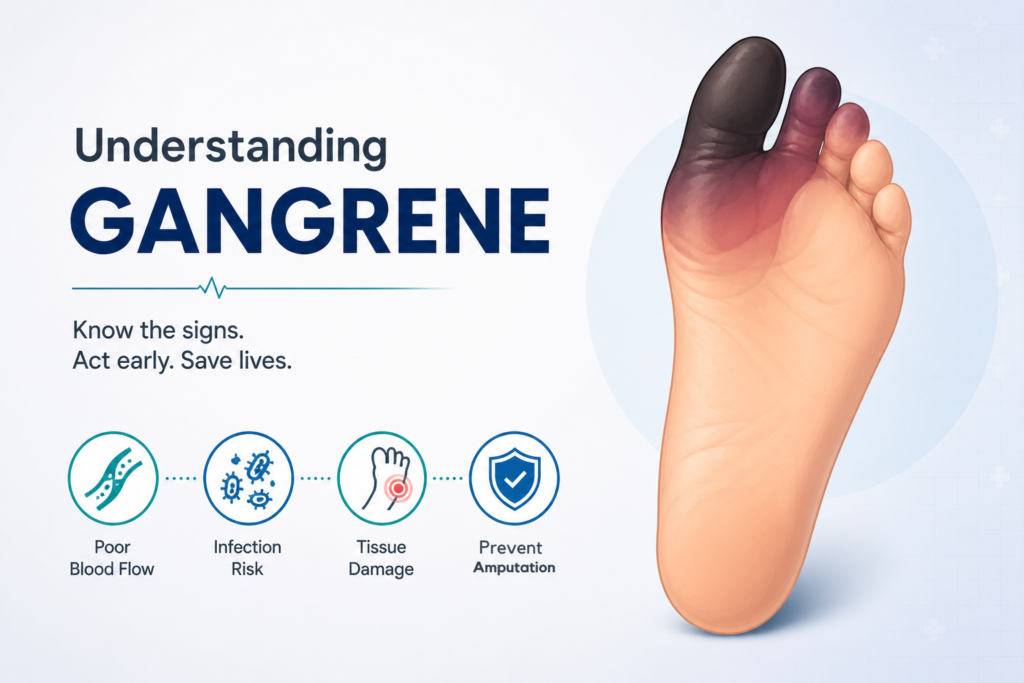
What is Gangrene?
Types of Gangrene
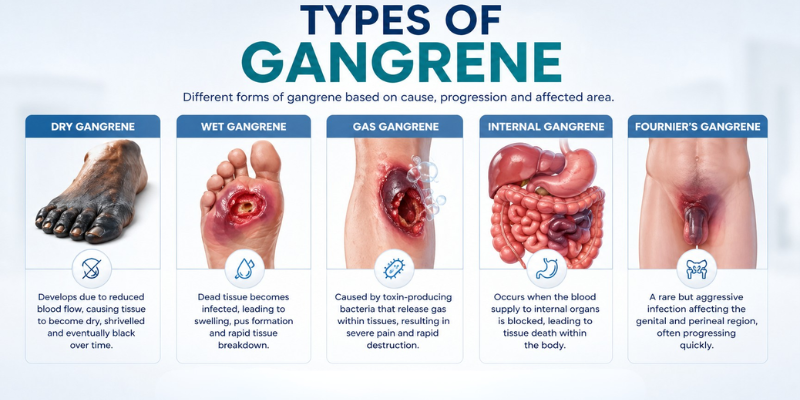
- Dry gangrene: Develops due to reduced blood flow, causing tissue to become dry, shrivelled and eventually black over time.
- Wet gangrene: Dead tissue becomes infected, leading to swelling, pus formation and rapid tissue breakdown.
- Gas gangrene: Caused by toxin-producing bacteria that release gas within tissues, resulting in severe pain and rapid destruction.
- Internal gangrene: Occurs when the blood supply to internal organs is blocked, leading to tissue death within the body.
- Fournier’s gangrene: A rare but aggressive infection affecting the genital and perineal region, often progressing quickly.
Gangrene Causes
- Reduced blood flow: Conditions like peripheral artery disease or atherosclerosis limit oxygen delivery, leading to tissue death.
- Diabetes: Chronic high blood sugar damages blood vessels and nerves, increasing the risk of unnoticed injuries and poor healing.
- Severe bacterial infection: Toxin-producing bacteria destroy tissues rapidly, especially in wet or gas gangrene.
- Trauma or injury: Burns, frostbite or deep wounds can disrupt circulation and create an entry point for infection.
- Weakened immune system: Conditions such as cancer or chronic illness reduce the body’s ability to control infection.
What Are the Risk Factors of Gangrene?
- Diabetes with neuropathy or retinopathy and poor wound healing
- Peripheral artery disease or other circulation disorders
- Smoking, which narrows blood vessels, causes inflammation in vessels and reduces oxygen supply
- Obesity and a sedentary lifestyle affect vascular health
- Recent surgery, trauma or open wounds
- Immunocompromised states, such as cancer or chronic disease
Signs and Symptoms of Gangrene
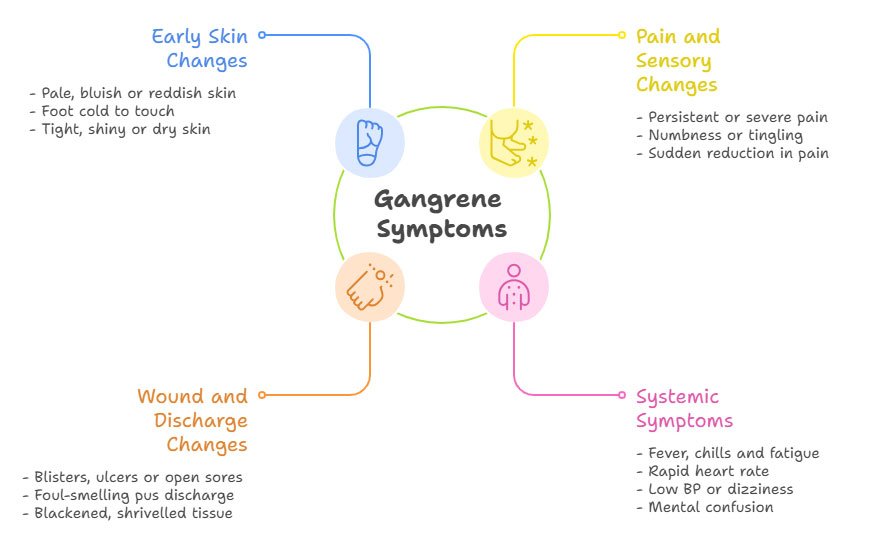
Early Skin Changes
- Pale, bluish or reddish skin that gradually turns brown or black due to reduced oxygen supply
- Localised coldness compared to the surrounding skin, indicating impaired blood circulation
- Tight, shiny or dry skin with reduced elasticity, often seen before visible tissue breakdown
Pain and Sensory Changes
- Persistent or severe pain in the early stages is caused by tissue ischaemia and inflammation
- Numbness or tingling as nerve function becomes impaired due to reduced blood flow
- Sudden reduction in pain in later stages, which may indicate nerve death and worsening tissue damage
Wound and Discharge Changes
- Formation of blisters, ulcers or open sores that fail to heal and may enlarge over time
- Foul-smelling discharge or pus due to bacterial infection and tissue decomposition
- Progressive tissue breakdown with blackened, shrivelled or moist necrotic areas depending on gangrene type
Systemic Symptoms (Advanced Cases)
- Fever, chills and fatigue indicate a spreading infection
- Rapid heart rate, low blood pressure or dizziness suggesting systemic involvement
- Confusion or an altered mental state, which may signal sepsis and requires urgent medical attention
What Is the Best Treatment for Gangrene?
- Surgical debridement: Removal of dead tissue to prevent spread and promote healing
- Antibiotic therapy: Broad-spectrum antibiotics initially, followed by targeted treatment based on infection
- Revascularisation: Procedures such as angioplasty or bypass surgery to restore blood supply
- Amputation: Required in advanced cases to prevent life-threatening spread of infection
- Supportive care: Oxygen therapy, fluid management and intensive care in severe infections
How to Prevent Gangrene?
- Control blood sugar levels, especially in diabetes
- Inspect your feet daily for cuts, blisters or colour changes
- Quit smoking to support healthy blood flow
- Address wounds promptly, esp if you’re a diabetic
- Stay physically active to improve circulation
- Wear proper footwear to prevent injuries
Take Home Message
FAQs
How to stop gangrene naturally?
No, gangrene cannot be reversed in advanced stages or treated at home. It requires urgent medical care to remove dead tissue, control infection and stabilise the affected area.
In the early stages, timely vascular intervention can restore blood flow and may help save the affected tissue or limb. While proper nutrition, wound care and blood sugar control support recovery, they cannot replace vascular treatment. Delaying care increases the risk of infection spread, sepsis and amputation.
What foods should be avoided with gangrene?
Foods that worsen circulation or blood sugar control should be limited. High-sugar foods and pulpy fruits like mango or chickoo can worsen diabetes, which delays healing.
Processed and high-fat foods may contribute to poor vascular health. Excess salt or high-sodium foods can affect blood pressure and circulation.
A balanced diet rich in nutrients supports immune function, tissue repair and overall recovery in patients undergoing gangrene treatment.
When should you go to the doctor for gangrene?
No, gangrene cannot be reversed in advanced stages or treated at home. It requires urgent medical care to remove dead tissue, control infection and stabilise the affected area.
In the early stages, timely vascular intervention can restore blood flow and may help save the affected tissue or limb. While proper nutrition, wound care and blood sugar control support recovery, they cannot replace vascular treatment. Delaying care increases the risk of infection spread, sepsis and amputation.
Foods that worsen circulation or blood sugar control should be limited. High-sugar foods and pulpy fruits like mango or chickoo can worsen diabetes, which delays healing.
Processed and high-fat foods may contribute to poor vascular health. Excess salt or high-sodium foods can affect blood pressure and circulation.
A balanced diet rich in nutrients supports immune function, tissue repair and overall recovery in patients undergoing gangrene treatment.
Seek medical attention immediately if you notice skin discolouration, especially black or dark patches, or symptoms such as persistent pain, numbness or unusual coldness in a limb.
Foul-smelling discharge, rapidly worsening wounds, or signs of infection, such as fever, require urgent evaluation. Early treatment is critical to prevent the spread of gangrene and avoid amputation or life-threatening complications like sepsis.